
Chemical Industry Environmental News: Changes Affecting Plant Operations


Staying ahead of operational risk now means tracking more than production metrics. This roundup of industrial environmental news for chemical industry professionals highlights the regulatory shifts, emissions rules, and sustainability pressures that are reshaping daily plant operations. From compliance costs to equipment upgrades and process adjustments, operators can use these updates to make faster, safer, and more informed decisions on the plant floor.
For plant operators, maintenance teams, and shift supervisors, environmental changes are no longer handled only by corporate compliance departments. New limits on volatile organic compounds, tighter wastewater monitoring, energy reporting requirements, and supply chain transparency requests are moving directly into daily operating routines. In practical terms, that means more inspections, more instrument checks, more documentation, and a closer link between environmental performance and production continuity.
This article translates current industrial environmental news for chemical industry users into operational actions. It focuses on what changes matter on the plant floor, which equipment decisions may need to be accelerated, how operators can reduce shutdown risk, and where manufacturing, processing machinery, industrial components, and electrical systems fit into the response.
Why environmental news now has direct impact on plant operations
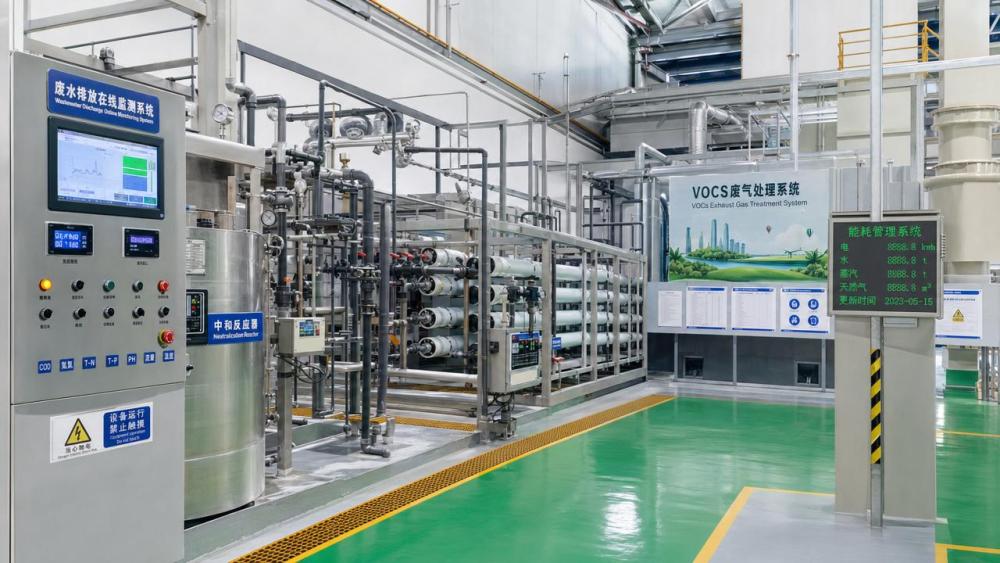
The most important shift is speed. In many chemical facilities, environmental requirements used to be reviewed quarterly or annually. Today, operating teams may need weekly tracking of emissions, monthly calibration logs, and same-shift responses to alarm deviations. A delay of even 24 to 72 hours in addressing an exceedance can trigger production restrictions, emergency maintenance, or extra reporting duties.
Industrial environmental news for chemical industry facilities increasingly centers on three connected pressures: stricter emissions thresholds, higher scrutiny of water and waste handling, and rising energy efficiency expectations. These are not abstract policy themes. They affect blower loading, pump selection, sealing systems, valve performance, burner tuning, filtration cycles, control panel upgrades, and spare-parts planning.
Three operational areas under the most pressure
- Air emissions control: leak detection, stack monitoring, thermal oxidation, scrubber efficiency, and fugitive emission management.
- Water and effluent handling: pH control, chemical oxygen demand reduction, suspended solids separation, and discharge recordkeeping.
- Energy and electrification: motor efficiency, variable frequency drive adoption, steam system optimization, and load monitoring.
For operators, these areas often overlap. A process change that reduces solvent loss may also cut fan runtime by 8% to 15%. A wastewater treatment adjustment may require new dosing pumps, sensor recalibration every 30 days, and revised maintenance intervals. Environmental performance is increasingly tied to equipment reliability and utility consumption rather than just end-of-pipe treatment.
What users on the plant floor are seeing first
Operators usually notice change before management reports catch up. Typical first signals include more frequent odor complaints, higher pressure drop across filters, rising current draw on exhaust systems, unstable pH trends, or longer batch turnaround due to additional sampling. These issues are early indicators that environmental requirements and actual operating conditions are diverging.
In many facilities, 4 practical checks help teams respond quickly: verify sensor drift, confirm valve sealing condition, review utility consumption against the last 7 to 14 days, and inspect housekeeping around transfer points. These are low-cost steps, but they often identify the source of compliance risk before a formal nonconformance occurs.
Operator checklist for the next 30 days
- Review alarms tied to emissions, wastewater, and energy load.
- Check calibration dates for key analyzers and transmitters.
- Inspect seals, gaskets, flanges, and transfer hoses in high-loss areas.
- Compare actual runtime of pollution-control equipment with production hours.
- Flag components with lead times longer than 2 to 6 weeks.
The table below shows how common environmental developments translate into daily operating changes in chemical plants. It is useful for maintenance planners, control room staff, and line users who need quick alignment between news signals and action priorities.
The key takeaway is that industrial environmental news for chemical industry operators should be treated as a maintenance and process signal, not only a compliance topic. Fast interpretation shortens response time, improves audit readiness, and reduces the chance that a minor deviation develops into a shutdown or permit issue.
Equipment and process adjustments chemical plants should prioritize
When environmental rules tighten, plants usually face a choice between procedural control and equipment upgrades. In reality, most facilities need both. Standard operating procedure changes can deliver quick gains in 1 to 4 weeks, but sustained compliance often depends on more stable measurement, better containment, and improved energy efficiency from machinery and electrical systems.
High-priority upgrade categories
The first category is monitoring and control. Facilities with aging analyzers, unintegrated data points, or manual logging are slower to detect drift. Upgrading transmitters, adding continuous monitoring points, or improving PLC visibility can reduce response time from several hours to a few minutes. That matters when permit limits or internal thresholds are narrow.
The second category is sealing, transfer, and capture. In chemical environments, small leaks around pumps, valves, loading points, and hose connections can create recurring environmental losses. Replacing worn seals, using better-compatible elastomers, improving local exhaust, and standardizing transfer procedures often provides measurable gains without a full process redesign.
The third category is power and utility efficiency. Motors in the 5 kW to 75 kW range, variable frequency drives, burner controls, and heat recovery systems are common starting points. Even a 5% to 10% reduction in electricity or fuel intensity can support environmental reporting targets while lowering operating cost pressure.
Typical implementation sequence
- Identify the top 3 environmental deviations or loss points from the last 90 days.
- Separate them into measurement, mechanical, and process-control causes.
- Set a 30-day quick-fix plan and a 90- to 180-day upgrade plan.
- Review spare-parts lead times, contractor access, and shutdown windows.
- Train operators on the revised alarm and inspection routines.
For users tracking industrial environmental news for chemical industry operations, the most practical question is not whether an upgrade is advanced or simple. It is whether the change reduces variation, cuts unplanned intervention, and remains serviceable under plant conditions such as corrosive atmosphere, washdown frequency, temperature cycling, and dust exposure.
The comparison below can help teams prioritize investments by operational value rather than by headline cost alone.
This comparison shows why equipment selection should include serviceability, not only technical capability. A system that performs well on paper but requires specialist intervention every 2 weeks may create more risk than a slightly simpler setup with stable monthly maintenance.
Common mistakes during environmental upgrades
One common mistake is solving only for the regulated endpoint. Plants may add monitoring at the stack or discharge outlet but ignore upstream causes such as mixing inconsistency, poor valve response, or unstable feed conditions. That approach increases reporting visibility but does not reduce root-cause frequency.
Another mistake is underestimating downtime planning. A motor replacement, analyzer addition, or piping reroute may appear small, but if it affects interlocks, cabling, or hazardous-area work permits, installation can extend from 1 day to 1 week. Operators should be involved early because they know the actual access constraints, cleaning needs, and shift timing issues.
How operators can turn environmental updates into practical control routines
Reading industrial environmental news for chemical industry use is only valuable if the information becomes a repeatable routine. The best-performing plants usually convert external developments into site-level checklists, alarm thresholds, maintenance tasks, and procurement triggers. That conversion process does not need to be complex, but it must be consistent.
A workable 5-step routine for plant teams
- Track external updates weekly and sort them into air, water, waste, and energy topics.
- Map each update to affected assets such as fans, scrubbers, pumps, motors, or control panels.
- Assign one owner per shift or area to verify field conditions within 7 days.
- Log action items with due dates for 14, 30, or 90 days depending on urgency.
- Review completion status at the next production and maintenance coordination meeting.
This routine helps operators avoid the gap between awareness and execution. It also supports purchasing teams by identifying which spare parts, sensors, filters, seals, cables, or electrical components may need faster sourcing due to new environmental expectations or export-related supply chain delays.
Procurement signals users should not ignore
- Lead times extending beyond planned shutdown windows, especially 4 to 8 weeks for specialized instruments or drive components.
- Repeated emergency purchases of the same seal, hose, filter, or dosing accessory.
- Calibration consumables or replacement probes falling below a 30-day minimum stock level.
- Vendors unable to confirm compatibility with corrosive media, temperature range, or enclosure needs.
These signals matter because environmental compliance increasingly depends on component availability. A missing analyzer part or incompatible gasket can interrupt operation just as seriously as a mechanical breakdown. In this sense, environmental resilience is also a supply chain issue.
FAQ from operators and users
Do plants need major capital projects every time environmental rules change?
Not always. Many sites can reduce risk through 3 lower-cost actions first: tighter inspections, better calibration discipline, and targeted component replacement in high-loss areas. Capital projects become more urgent when deviations are recurrent, manual control is too slow, or existing equipment cannot maintain stable performance within required limits.
Which departments should review industrial environmental news for chemical industry updates?
At minimum, operations, maintenance, EHS, utility management, and procurement should review them together. A 20- to 30-minute weekly review is often enough to flag the top 2 or 3 items that need action. Shared review reduces the chance that one department sees a risk while another delays the response.
What is the fastest way to improve environmental performance on the floor?
Focus on repeat losses. Start with leak points, unstable dosing, drifting sensors, overloaded exhaust paths, and unnecessary idle runtime. These five areas often produce visible results in less than 30 days and create better baseline data before larger machinery or electrical upgrades are approved.
Chemical plants that treat environmental news as operational intelligence are better positioned to protect uptime, control cost, and reduce audit stress. The most effective response is not chasing every headline, but linking each relevant update to equipment condition, process stability, spare-part readiness, and operator workflow.
If your team is evaluating machinery upgrades, industrial components, monitoring devices, or electrical systems in response to current industrial environmental news for chemical industry operations, now is the right time to review your site priorities. Contact us to discuss product details, compare practical upgrade paths, or get a customized solution aligned with your plant’s operating conditions and compliance goals.
 Choosing Industrial Dust Collectors: Airflow, Dust Type, and Filter MediaTime : Oct 26, 2026
- Industrial Wastewater Treatment Equipment Suppliers: Verifying Performance GuaranteesTime : Oct 23, 2026
 Planning retrofit shutdowns when installing modular carbon capture unitsTime : Oct 16, 2026


Industry Briefing
Get the top 5 industry headlines delivered to your inbox every morning.