
Industrial Connectors Supplier Landscape: What Procurement Teams Should Compare

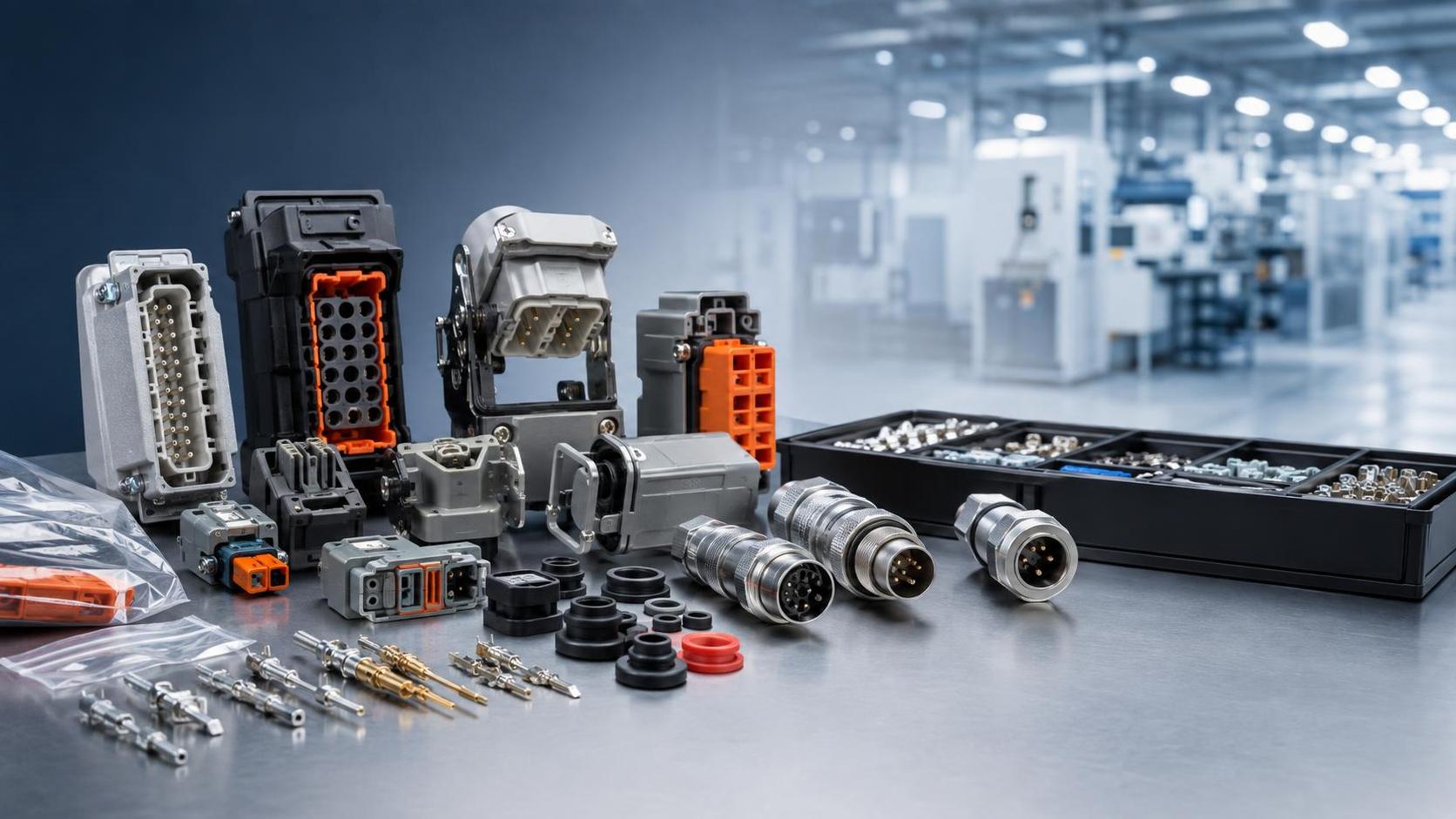
Industrial connector sourcing is becoming less of a catalog exercise and more of a supplier-capability assessment. Unit price still matters, but it rarely explains the full procurement risk. A connector can meet a basic dimensional requirement and still create problems through unstable plating quality, inadequate sealing, inconsistent crimp performance, long replenishment times, or missing documentation for the destination market.
The current industrial connectors supplier landscape is therefore divided less by product name than by business capability. Some suppliers compete through high-volume standard parts, others through engineering support and customization, while distributors add value through inventory access, multi-brand sourcing, and regional service. Procurement decisions are becoming more effective when these models are compared against the application, supply risk, compliance requirements, and expected product life.
Why supplier comparison is changing
Industrial equipment is often assembled from systems sourced across several countries. A connector may be designed in one market, manufactured in another, integrated into equipment elsewhere, and delivered to an end user with its own certification and documentation requirements. This creates procurement questions that cannot be answered by a product catalog alone.
Buyers increasingly need to establish:
- whether the supplier can maintain consistent electrical and mechanical performance across production batches;
- whether the proposed part is approved for the intended voltage, current, environment, and wiring method;
- whether drawings, test reports, declarations, and change notifications are available;
- whether production capacity supports both the initial project and repeat orders;
- whether the supplier can respond when a connector must be modified for space, cable, sealing, or assembly constraints.
This shift is particularly important for automation equipment, control cabinets, motors, power distribution systems, factory sensors, mobile machinery, and outdoor electrical installations. In these applications, a connector failure can cause more than a replacement-part expense. It can interrupt commissioning, create field-service work, delay shipment of the complete machine, or introduce a recurring quality issue.
Manufacturers, distributors, and specialist suppliers serve different needs
The term “supplier” covers several operating models. Comparing them as if they were interchangeable can lead to an unsuitable sourcing decision.
A distributor may be the best option for maintenance demand or low-volume assembly when immediate availability is more important than factory-direct pricing. A manufacturer may be more suitable for a new equipment platform requiring controlled interfaces, custom tooling, or long-term design support. A specialist producer can be valuable when the application involves vibration, chemical exposure, high ingress protection, compact packaging, or unusual cable construction.
The correct comparison is not “factory versus distributor.” It is whether the supplier model matches the purchasing pattern and technical risk. A low-volume buyer may obtain a lower total cost from a stocked distributor, even if the distributor’s unit price is higher, because it avoids excess inventory, tooling charges, and long factory lead times.
Market direction: capability is moving beyond standard catalog supply
More demand for application-specific configuration
Industrial connectors are increasingly purchased as part of a defined interface rather than as isolated components. Buyers may require a specific contact arrangement, cable length, backshell, keying position, locking method, mounting pattern, shielding approach, or environmental seal. In machinery and automation, the available installation space and cable routing often determine the connector design as much as the electrical rating.
This favors suppliers that can manage controlled variants without losing production discipline. Customization should not be judged only by whether a supplier says “yes.” The more useful questions are whether the supplier has documented design control, sample approval procedures, tooling management, first-article inspection, and a method for controlling revisions after approval.
Environmental performance is becoming a procurement filter
Industrial connectors may operate in locations exposed to dust, water, oil, cleaning agents, vibration, impact, heat cycling, or electromagnetic interference. Environmental suitability depends on the complete connector system: housing material, contact plating, gasket, cable entry, assembly method, and mating condition. A high ingress-protection rating on a housing does not automatically guarantee the same performance after field assembly or when an unsuitable cable gland is used.
Procurement specifications should therefore distinguish between a rating for the unmated connector, the mated connector, and the installed assembly. Where relevant, buyers should also verify the test method, test configuration, temperature range, and whether the rating applies to repeated mating cycles. IEC 60529 may be relevant for ingress protection, while IEC 61984 applies to certain connector safety and performance considerations; the applicable requirements depend on the connector type and end equipment.
Compliance documentation is becoming part of supplier qualification
Certification marks and declarations are not interchangeable. A supplier may provide RoHS or REACH-related material information, while the equipment manufacturer may also need evidence connected with regional safety approvals, flammability, insulation properties, or end-product certification. UL and CSA requirements may be relevant in North American applications, but the exact approval route depends on the component, installation, and final equipment.
Documentation should be checked at the part-number level. Generic certificates covering a product family may not confirm that the selected housing, contact material, plating, or assembled configuration is included. The purchasing file should ideally contain a controlled drawing, specification sheet, approval information where applicable, material declarations, and a clear revision history.
The technical variables that expose weak comparisons
Two connectors with the same nominal current rating may not be equivalent in use. Current capacity can depend on conductor size, contact arrangement, ambient temperature, grouping, mating condition, and allowable temperature rise. A supplier comparison that records only voltage and current may overlook derating requirements that become significant in compact or densely packed assemblies.
Contact material and plating also deserve close attention. Base material influences mechanical strength and conductivity, while plating affects contact resistance, corrosion behavior, wear, and mating durability. Gold, tin, nickel, and other finishes are not selected simply according to price. Their suitability depends on the current level, environment, mating frequency, storage conditions, and required reliability.
Mechanical factors can be equally decisive. Procurement teams should review:
- mating and unmating force;
- retention and locking performance;
- keying and misconnection prevention;
- vibration and shock resistance;
- allowable cable bend radius;
- panel cutout and mounting tolerance;
- field termination method and required tooling;
- expected mating-cycle life.
Termination is a common source of hidden variation. Crimp contacts require appropriate wire preparation, tooling, and inspection. Screw, spring, solder, and insulation-displacement methods each impose different assembly controls. If a supplier offers a lower-priced connector but requires unfamiliar tooling or increases labor time, the apparent savings may disappear during production.
Supply reliability now includes engineering and change control
Lead time is only one part of delivery reliability. A supplier can quote an attractive lead time for an initial order but struggle with repeat production, allocated materials, tooling capacity, or engineering changes. The comparison should cover normal lead time, capacity during peak demand, minimum order quantities, forecast requirements, safety-stock options, and the supplier’s process for handling shortages.
Lifecycle control is also important for equipment manufacturers. Connector designs may remain in service for many years, while the supplier’s commercial priorities can change more quickly. Buyers should ask how product discontinuation is communicated, whether approved alternatives are available, how last-time-buy decisions are managed, and whether a change in resin, plating, contact geometry, or manufacturing location triggers customer notification.
Traceability should be proportionate to the application. For critical equipment, lot identification, material records, inspection results, and a defined nonconformance process may be necessary. For less demanding applications, the documentation package can be simpler, but the supplier should still be able to identify what was shipped and under which specification.
Price comparison should use total procurement cost
The quoted unit price is often the easiest number to compare and the least complete one. A more realistic calculation includes connector bodies, contacts, backshells, seals, tooling, packaging, freight, inspection, inventory carrying cost, and the labor required for termination and rework.
Risk-related costs also matter. A connector with inconsistent crimp quality may generate line stoppages. A part with unstable plating can increase incoming inspection or field-return exposure. A long lead time may force the buyer to hold more stock or qualify a second source. These costs may not appear in the supplier quotation, but they influence the commercial result.
For this reason, procurement evaluations should separate the following questions:
- What is the landed cost at the planned order quantity?
- What additional tooling or qualification cost is required?
- What inventory level is needed to protect production?
- How much assembly labor is involved?
- What is the financial impact of a delayed or rejected shipment?
A supplier with a slightly higher price may be commercially stronger if it reduces qualification work, offers stable documentation, maintains regional stock, or supports a controlled second source. The reverse is also true: a premium brand is not automatically the most economical choice if its technical features exceed the application requirement or its delivery model does not fit the purchasing plan.
What a practical supplier evaluation should verify
Shortlisting should begin with application requirements rather than brand familiarity. The technical file should define the electrical load, environment, cable construction, installation method, space constraints, mating frequency, applicable market requirements, and expected service life. Without this baseline, supplier quotations are difficult to compare because each company may interpret the requirement differently.
Supplier questionnaires and technical reviews should then examine the evidence behind the quotation:
- Does the supplier own or control the relevant tooling?
- Can it provide samples from a production-representative process?
- Are test reports linked to the proposed part number and configuration?
- What inspection controls cover contact dimensions, plating, sealing, and crimp performance?
- How are engineering changes communicated and approved?
- Can the supplier support the destination country’s documentation and logistics requirements?
- What is the recovery plan if a key material, machine, or production site becomes unavailable?
Samples should be assessed for fit, locking, termination quality, dimensional consistency, and compatibility with mating components. Where the connector is safety- or reliability-critical, qualification should reflect the actual installation rather than a loose bench test. The assembled connector, cable, gland, mounting panel, and operating environment may all affect performance.
Where procurement decisions commonly fail
One error is treating a connector as a commodity solely because the interface looks standard. Interchangeability may be limited by contact geometry, keying, tolerances, mating force, approval status, or cable termination details. Another is accepting a family-level certificate without confirming that the selected variant is covered.
Replacing a specified connector with a visually similar alternative can also create assembly problems. Differences in crimp tooling, contact retention, seal compression, or backshell dimensions may not be visible until production. Substitution should therefore be managed through drawing review, sample approval, and documented technical acceptance.
A further weakness is qualifying only the supplier’s sales contact while ignoring the manufacturing and quality process behind the offer. Commercial responsiveness is useful, but it does not demonstrate stable production capability. The purchasing decision should be based on verifiable technical and operational evidence.
A more resilient sourcing position
Not every application requires dual sourcing. Maintaining two fully qualified suppliers can increase testing, inventory, and engineering workload. However, dependence on one supplier should be an intentional decision, not an accidental result of choosing the lowest quotation.
For strategically important connectors, resilience can come from several measures: approved alternatives, common interface designs, documented tooling, regional inventory, forecast visibility, and clear change-notification terms. The appropriate combination depends on the connector’s criticality and replacement difficulty.
The strongest supplier comparison is therefore not a ranking of brands. It is a structured assessment of technical fit, evidence quality, supply continuity, compliance readiness, and total cost over the product lifecycle. As industrial equipment becomes more interconnected and globally sourced, suppliers that combine reliable production with disciplined documentation and practical engineering support are likely to receive greater procurement attention. For buyers, the immediate priority is to convert these capabilities into measurable qualification criteria before a quotation is accepted.


Industry Briefing
Get the top 5 industry headlines delivered to your inbox every morning.