
How Supply Chain Restructuring Changes Mechanical Component Costs and Sourcing Risk

How Supply Chain Restructuring Changes Mechanical Component Costs and Sourcing Risk
Does global supply chain restructuring affect mechanical component pricing? Yes, but the impact is rarely limited to a supplier’s quoted unit price.
For procurement professionals, restructuring changes where costs appear, how quickly disruptions travel, and which suppliers can support stable production over time.
Supplier location, material access, freight capacity, tariffs, qualification costs, and engineering support now influence total component cost more than before.
Buyers therefore need to evaluate mechanical components through total landed cost, supply continuity, and operational resilience rather than purchase price alone.
Why Mechanical Component Prices Change During Supply Chain Restructuring
Global supply chain restructuring involves shifting production, adding regional suppliers, qualifying alternative factories, and reducing dependence on concentrated sourcing locations.
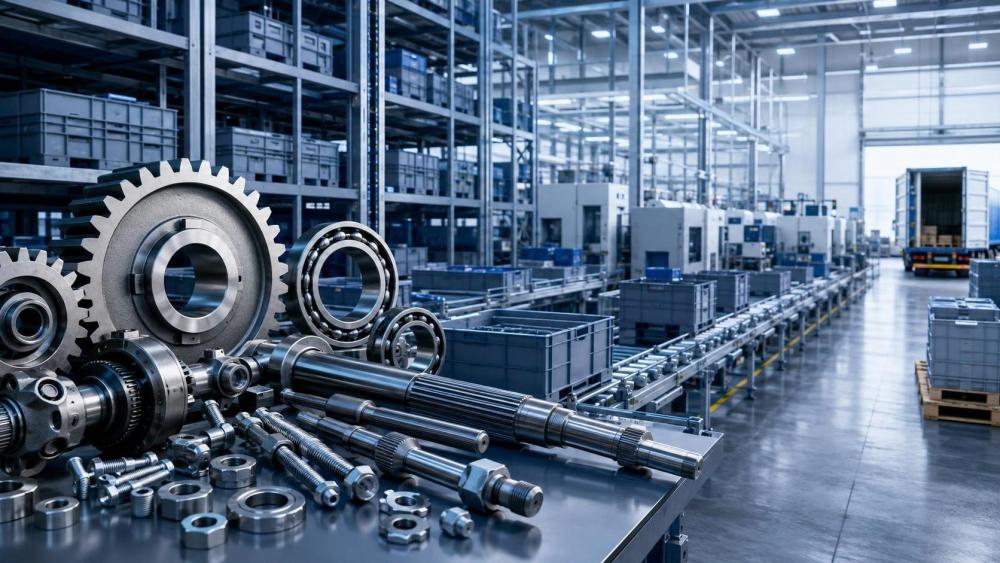
These decisions affect common mechanical components, including bearings, castings, forgings, shafts, fasteners, gears, housings, valves, and machined assemblies.
Price movement usually reflects several connected factors rather than one event. A lower factory price may be offset by logistics, duties, inventory, or quality costs.
When production moves closer to final assembly, freight distance may decline. However, local labor, energy, tooling, and capacity costs can increase.
Conversely, an offshore supplier may retain a competitive piece price but create longer lead times, larger order quantities, and greater exposure to transport disruption.
Procurement teams should separate visible price changes from structural cost changes. This distinction helps prevent short-term quotations from driving long-term sourcing decisions.
Unit Price Is No Longer the Best Comparison Point
The quoted unit price remains important, but it is not a sufficient measure of mechanical component competitiveness in a restructured supply network.
Total landed cost should include purchase price, packaging, inland transport, ocean or air freight, insurance, duties, brokerage, inspection, inventory, and financing.
For engineered components, buyers should also include tooling amortization, first-article inspection, process validation, and engineering-change management costs.
A supplier with a five percent lower unit price can become more expensive when transit variability requires additional safety stock and expedited freight.
Long replenishment cycles also tie up working capital. This matters especially for high-value gears, precision-machined parts, hydraulic components, and specialized assemblies.
Procurement should compare suppliers using a consistent cost model across regions. Without this discipline, regionalization decisions can appear uneconomic or attractive for misleading reasons.
Tariffs, Trade Rules, and Country-of-Origin Exposure
Trade policy has become a more direct cost variable for industrial buyers. Tariffs can quickly change the relative economics of established mechanical component suppliers.
Country-of-origin rules matter because assembly location does not always determine origin. Material transformation, component value, and manufacturing processes may affect classification.
Buyers importing castings, forgings, steel fasteners, bearings, or fabricated parts should verify tariff classification before approving a new source.
Incorrect assumptions can create retroactive duty liabilities, customs delays, and disputes over who bears the added cost under commercial agreements.
A regional supplier may offer a higher ex-works price but lower duty exposure. That advantage can be durable when policy conditions remain uncertain.
Procurement contracts should define responsibility for tariff changes, classification accuracy, customs documentation, and origin declarations before orders are placed.
Material Availability Often Matters More Than Factory Geography
Mechanical component suppliers depend on upstream inputs such as alloy steel, stainless steel, aluminum, copper, rubber, resins, coatings, and electronic subcomponents.
Moving final machining or assembly to another country does not automatically remove dependence on concentrated material sources or specialized processing capacity.
A local machine shop may still import bar stock, precision bearings, heat-treatment chemicals, or cast blanks from the same global supply base.
This means procurement teams should map critical materials beyond tier-one suppliers. The real risk may sit with a mill, foundry, plating provider, or toolmaker.
Material substitutions can reduce exposure, but they require engineering approval. Changes to alloy grade, coating, hardness, or tolerance can affect performance and warranty risk.
For critical components, buyers should request material traceability, approved sub-supplier lists, and contingency plans rather than relying on broad resilience claims.
Regionalization Can Improve Lead-Time Reliability, but Not Automatically
Regional sourcing is often presented as a solution to long lead times. In practice, reliability depends on supplier capacity, production planning, and logistics infrastructure.
A nearby supplier with overloaded machining centers may provide less dependable delivery than an overseas partner with disciplined scheduling and reserved shipping capacity.
Lead-time analysis should measure variability, not only quoted weeks. Procurement teams need actual order-to-delivery performance across normal and disrupted conditions.
Regional suppliers can reduce transit uncertainty and simplify communication. They may also enable smaller replenishment quantities and faster response to demand changes.
However, local production clusters can create correlated risk. A power shortage, labor disruption, weather event, or raw-material constraint may affect multiple approved suppliers.
The practical goal is not simply nearshoring. It is building a supply network with predictable replenishment, qualified alternatives, and manageable recovery time.
Supplier Qualification Creates Upfront Costs but Can Reduce Future Disruption
Adding suppliers requires more than collecting quotations. Mechanical components often need technical validation before a new source can support serial production.
Qualification may involve drawings, samples, dimensional reports, material certificates, process audits, capability studies, testing, and customer-specific approvals.
For safety-critical or high-precision parts, validation can require months. Bearings, pressure components, drive assemblies, and welded structures may need extensive testing.
These expenses can make dual sourcing appear costly in the first year. Yet the cost should be compared against production stoppage, emergency freight, and lost revenue.
Buyers should distinguish between technically interchangeable suppliers and commercially available suppliers. A factory may have capacity but lack approved processes or required certifications.
A staged qualification plan can control cost. Start with low-risk parts, validate performance, then expand volume after quality and delivery targets are demonstrated.
How Restructuring Changes Supplier Bargaining Power
Supply chain restructuring can shift negotiating leverage between buyers and suppliers. This is especially visible where technical capability is concentrated among a few manufacturers.
When buyers seek alternatives simultaneously, qualified suppliers may gain pricing power. Capacity reservations, tooling availability, and engineering resources become negotiable constraints.
New suppliers may offer aggressive introductory pricing to win business. Procurement should test whether that pricing includes sustainable margins and realistic capacity assumptions.
Unsustainably low quotations can lead to later increases, quality shortcuts, delayed investment, or reluctance to support engineering changes after launch.
Longer agreements can improve commercial stability when they include transparent adjustment mechanisms for metals, energy, currency, and freight movements.
Price formulas should specify indices, review frequency, adjustment thresholds, and supporting evidence. Ambiguous clauses create friction precisely when market conditions become volatile.
Build a Cost-and-Risk Scorecard for Mechanical Components
Procurement teams need a repeatable way to compare sourcing options. A scorecard prevents decisions from being dominated by headline price or recent disruption.
Start with total landed cost, including expected freight, duties, inventory carrying costs, quality costs, and likely expediting requirements for each supplier.
Then assess supply risk through geographic concentration, material dependency, capacity utilization, financial health, quality history, and logistics route exposure.
Include operational measures such as on-time delivery, lead-time variation, minimum order quantity, engineering responsiveness, and recovery capability after an interruption.
Weight the criteria by component criticality. A standard fastener and a custom gearbox should not receive the same resilience requirements or qualification investment.
For high-impact components, scenario analysis is useful. Model a port delay, tariff increase, mill outage, currency shift, or sudden demand increase.
The result should identify the cost of resilience clearly. Management can then decide where dual sourcing, regional inventory, or supplier development provides justified value.
When Dual Sourcing Is Worth the Added Complexity
Dual sourcing is not automatically the right answer. It can increase administrative work, engineering effort, quality oversight, and volume fragmentation across suppliers.
It is most valuable when a component has high production-stop risk, constrained replacement options, long qualification cycles, or substantial disruption consequences.
Dual sourcing may be less useful for low-value standardized items with broad market availability, provided specifications and quality requirements remain straightforward.
Volume allocation matters. A second supplier receiving only occasional orders may not maintain tooling, trained labor, material access, or production priority.
Many buyers use a primary-secondary model with meaningful recurring volume. This preserves supplier readiness while retaining a preferred source for scale efficiency.
Contracts should establish capacity expectations, tooling ownership, data rights, quality responsibilities, and notice periods for allocation changes between approved suppliers.
Questions Procurement Teams Should Ask Before Moving a Component
Before relocating a component source, buyers should ask whether the change solves a real risk or merely shifts cost and complexity elsewhere.
What portion of total cost comes from the component itself, and what portion comes from logistics, tariffs, inventory, quality, and working capital?
Which upstream materials and sub-suppliers remain concentrated? Does the proposed source rely on the same foundry, mill, bearing producer, or coating provider?
Can the supplier meet required tolerances, traceability, certifications, and production volumes without excessive dependence on subcontractors or manual inspection?
How long will qualification take, and what happens if the existing source fails before approval is complete? Is interim inventory sufficient?
What delivery performance has the supplier achieved for comparable components? Quoted lead time matters less than proven performance under changing demand.
Finally, buyers should ask whether commercial terms support continuity. Payment conditions, inventory commitments, price mechanisms, and communication routines all affect resilience.
Use Market Intelligence to Monitor the New Risk Landscape
Supply chain restructuring is not a one-time sourcing project. Costs and risks continue changing as trade policy, capacity, material markets, and demand evolve.
Procurement teams should monitor supplier expansions, factory closures, investment announcements, labor developments, shipping conditions, and industrial policy in relevant regions.
Industry information can reveal pressure before it appears in a quotation. Foundry capacity constraints, steel price movements, or export rules may signal upcoming disruption.
Regular supplier reviews should combine commercial data with market intelligence. This creates earlier warning than relying solely on late deliveries or price increase notices.
NEXUSINSIGHTS supports industrial decision-makers by tracking manufacturing markets, machinery developments, supplier activity, trade trends, and global industrial supply chain changes.
For procurement organizations, timely information improves the ability to compare sourcing regions, anticipate cost drivers, and prepare alternative supply options before disruption escalates.
Conclusion: Price Competitiveness Depends on Resilience as Well as Cost
Global supply chain restructuring does affect mechanical component pricing, but the impact is best understood through total cost, not supplier quotation alone.
Regionalization can reduce transit exposure, while diversified sourcing can improve continuity. Both strategies also introduce qualification requirements, capacity constraints, and administrative costs.
Procurement professionals should evaluate each component according to its criticality, technical complexity, material dependency, and financial impact on production operations.
The strongest sourcing decisions balance unit cost with delivery reliability, trade exposure, supplier capability, and recovery speed during disruption.
By using structured cost models, supplier risk scorecards, and ongoing market intelligence, buyers can make supply chain restructuring a practical competitive advantage.


Industry Briefing
Get the top 5 industry headlines delivered to your inbox every morning.