
How Manufacturers Can Build a Resilient Supply Chain for Disruptions and Volatility

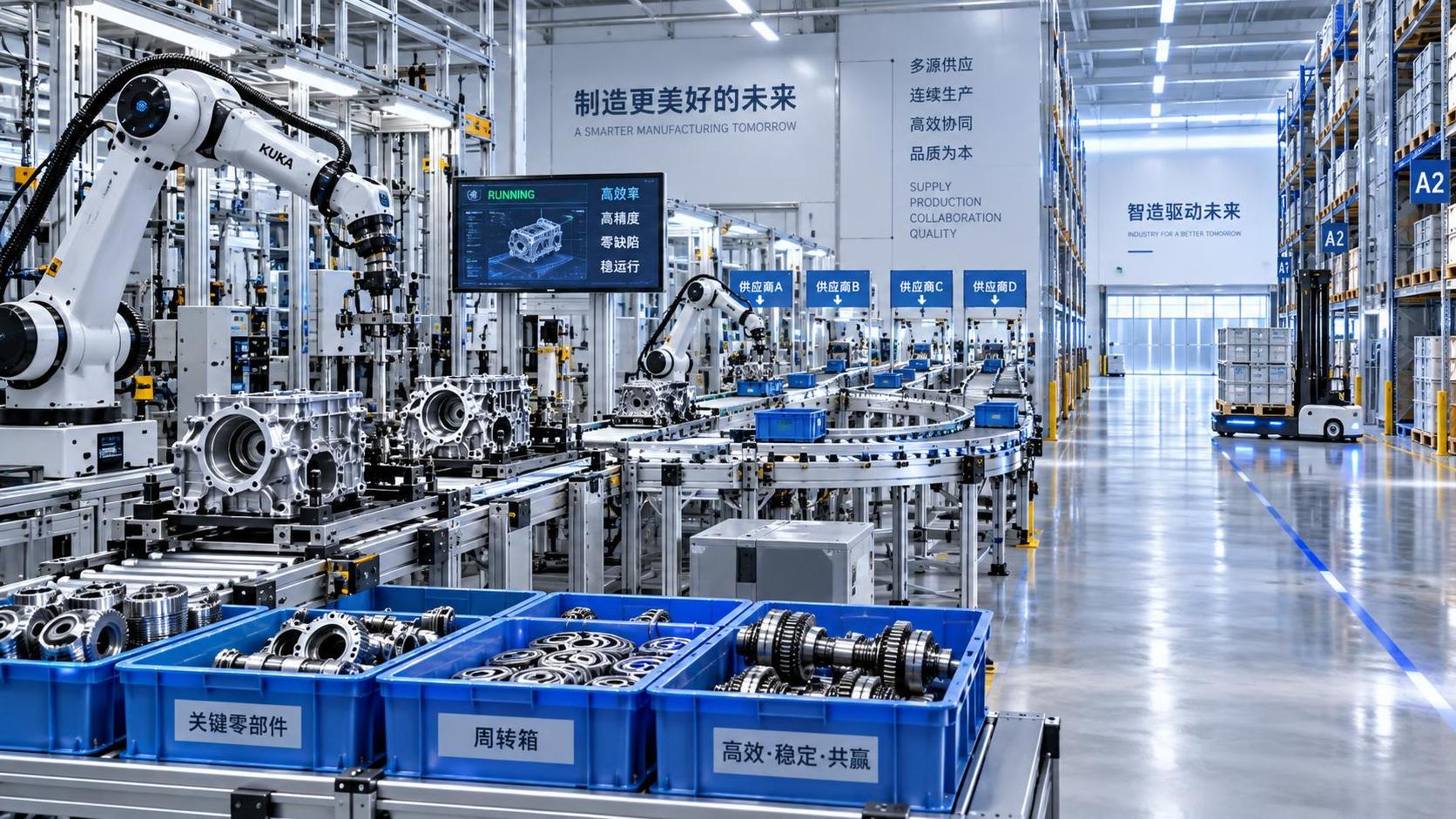
A resilient manufacturing supply chain is now a board-level requirement because disruptions can stop production, reduce revenue, damage customer relationships, and weaken long-term market position.
Material shortages, port congestion, geopolitical restrictions, energy swings, supplier failures, and unpredictable demand have exposed the limits of cost-focused sourcing strategies.
For business leaders, resilience does not mean holding unlimited inventory or replacing every overseas supplier. It means making deliberate trade-offs between cost, continuity, responsiveness, and risk.
The strongest manufacturing supply chain networks identify vulnerabilities early, respond quickly when conditions change, and recover without creating uncontrolled costs or operational confusion.
This article explains how manufacturers can assess exposure, prioritize investments, improve supplier performance, and develop practical capabilities for a volatile industrial environment.
Start With the Disruptions That Could Actually Stop Production
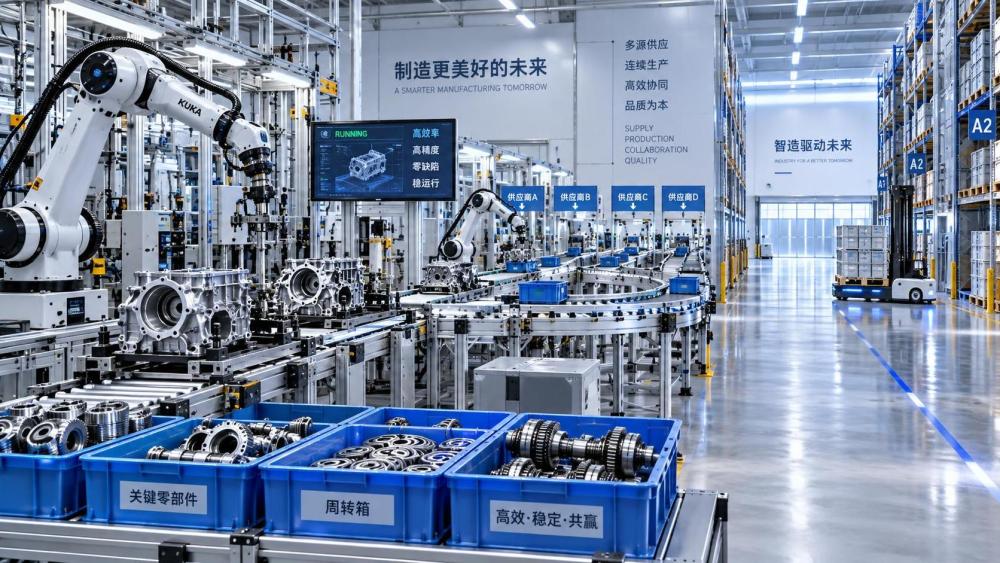
Many resilience programs fail because companies begin with generic risk registers instead of identifying the specific events that could interrupt critical production, delivery, or customer commitments.
Leadership teams should first define what disruption means commercially: missed shipment dates, lost production hours, quality failures, excess working capital, contract penalties, or lost customers.
That definition creates a clearer basis for investment decisions. A two-day delay for standard hardware may matter less than a one-day shortage of proprietary control components.
Map the supply chain around critical products, not simply around supplier spend. High-revenue products, regulated equipment, long-lead components, and sole-source parts deserve priority attention.
For each critical item, assess supplier concentration, geographic concentration, tooling dependency, inventory coverage, transport routes, technical substitutability, and the time required to qualify alternatives.
Companies should also distinguish between frequent operational disruptions and low-probability catastrophic events. Both matter, but they require different response plans, investments, and management routines.
Recurring delays may require better planning discipline and supplier communication. Major geopolitical events may require regional sourcing options, redesigned products, or changes to customer contracts.
A useful executive question is simple: which ten supply interruptions would cause the greatest financial or operational damage during the next twelve months?
Answering that question requires input from procurement, operations, engineering, finance, logistics, sales, and quality teams. No individual function sees the entire exposure.
Use a risk heat map, but connect each risk to a measurable business consequence. Generic red, amber, and green ratings rarely justify investment decisions.
For example, quantify estimated downtime, expedited freight, lost margin, recovery costs, and customer exposure. Financial framing helps leaders compare resilience initiatives against other capital demands.
Build Visibility Beyond Tier-One Suppliers
Most manufacturers know their direct suppliers reasonably well. The larger resilience problem often sits deeper in the network, where sub-tier dependencies remain invisible until disruption occurs.
A tier-one supplier may appear stable while relying on one chip fabricator, casting plant, connector producer, or specialist coating provider in another region.
Supply chain visibility should therefore focus on critical paths rather than attempting to collect complete data on every supplier and component.
Begin by tracing the bill of materials for strategically important products. Identify the components with long lead times, limited producers, high qualification barriers, or high replacement costs.
Ask direct suppliers to disclose their important production locations, key sub-tier sources, inventory policies, capacity constraints, and contingency plans for essential materials.
Supplier transparency cannot rely entirely on questionnaires. Manufacturers should validate high-risk information through audits, contract reviews, shipment data, industry intelligence, and regular executive discussions.
Digital tools can support this work by combining purchase orders, inventory data, lead-time trends, shipment status, supplier performance, and external disruption alerts.
However, software does not create resilience by itself. Poor master data, inconsistent part descriptions, and disconnected planning processes can make dashboards misleading rather than useful.
Executives should require a concise visibility dashboard that highlights exceptions: parts below coverage targets, suppliers with deteriorating delivery performance, constrained capacity, and delayed transport lanes.
The goal is faster, better decisions. A useful dashboard should show who is affected, what action is needed, who owns it, and when escalation becomes necessary.
Visibility also improves commercial negotiations. Manufacturers that understand dependencies can discuss inventory commitments, capacity reservations, tooling ownership, and recovery responsibilities from a stronger position.
Diversify Supply Without Creating Unmanageable Complexity
Supplier diversification is one of the most common resilience recommendations, but adding suppliers indiscriminately can increase quality risk, administrative costs, and engineering workload.
The better approach is targeted multi-sourcing for items where disruption consequences outweigh the costs of qualification, supplier management, and lower purchasing leverage.
Not every component needs a second source. Commodity materials with broad availability often need monitoring, while proprietary assemblies may require formal contingency development.
Classify components according to business criticality and supply risk. This allows procurement teams to reserve multi-source efforts for items that genuinely threaten production continuity.
For high-risk components, evaluate alternate suppliers before a crisis begins. Confirm technical equivalence, regulatory requirements, tooling availability, test procedures, pricing, capacity, and logistics feasibility.
Engineering involvement is essential because a nominally equivalent component may affect product performance, certification, maintenance procedures, or customer approval requirements.
Regional diversification can reduce exposure to border closures, freight instability, and political tensions. Yet local sourcing should be evaluated against capacity, quality maturity, and total landed cost.
A supplier located closer to the factory is not automatically more resilient if it depends on the same imported raw materials, subcomponents, or specialized machinery.
Manufacturers should avoid transferring all volume immediately. A planned allocation model can preserve incumbent relationships while giving alternate suppliers enough volume to remain capable and committed.
Dual sourcing works best when contracts define minimum capacity, information-sharing expectations, quality standards, service levels, and responsibilities during shortages or emergency allocations.
For selected components, product redesign may offer greater resilience than supplier diversification. Standardized interfaces and approved substitutions can reduce dependence on unique parts.
Use Inventory and Capacity Strategically, Not Emotionally
After a severe shortage, organizations often respond by increasing inventory across the board. This can protect production temporarily but may also trap cash and hide underlying planning weaknesses.
Resilient inventory policies should be differentiated by criticality, lead-time variability, demand volatility, replenishment reliability, shelf life, and the financial impact of production stoppages.
Critical long-lead parts may justify safety stock or strategic buffers. Low-value, widely available items may require only standard replenishment rules and supplier performance monitoring.
Business leaders should compare carrying costs with interruption costs. The correct buffer is determined by the expected value of avoiding downtime, not by a blanket inventory target.
Capacity resilience matters equally. Suppliers may have sufficient annual capacity but lack flexibility to absorb sudden demand spikes, recover after outages, or support engineering changes.
Discuss capacity reservations with key suppliers, particularly for constrained electrical equipment, automation components, specialized castings, precision assemblies, and high-demand industrial materials.
Internal manufacturing capacity also needs contingency planning. Cross-training, preventive maintenance, flexible shift patterns, shared tooling, and backup production sites can shorten recovery times significantly.
These measures should be tested under realistic conditions. A contingency plan that exists only in a presentation may fail when teams face actual material, labor, or transport constraints.
Resilience improves when inventory, production planning, and sales commitments operate from the same assumptions. Conflicting demand signals create unnecessary shortages and emergency costs.
Strengthen Supplier Relationships and Contractual Discipline
Suppliers allocate scarce materials and capacity based partly on commercial relationships. Transactional purchasing behavior can leave manufacturers exposed when demand exceeds available supply.
Strategic suppliers need predictable forecasts, regular executive contact, faster issue resolution, and a credible understanding of the customer’s future demand and technical roadmap.
Forecasts should include ranges and scenarios, not just a single demand number. Suppliers can plan more effectively when they understand possible upside, downside, and timing changes.
In return, manufacturers should request earlier warning of labor shortages, quality concerns, production constraints, financial stress, and sub-tier supply disruptions.
Contracts should address more than price and delivery dates. They should establish requirements for business continuity, notification periods, inventory ownership, capacity access, data sharing, and recovery cooperation.
For essential components, manufacturers may consider investing in supplier tooling, joint inventory programs, or technical support. These arrangements require governance but can protect critical capability.
Supplier financial health deserves regular attention, especially among smaller specialized manufacturers. A technically capable supplier can still become a major risk through liquidity or ownership problems.
Scorecards should measure delivery, quality, responsiveness, lead-time stability, capacity communication, and recovery performance. Cost remains important, but it should not be the only metric.
When a supplier underperforms, escalation should be structured. Clear corrective-action milestones are more effective than repeated urgent calls without ownership, deadlines, or senior-level review.
Create an Operating Model That Supports Fast Decisions
Supply chain resilience depends on governance because disruptions cross functional boundaries. Procurement cannot solve shortages alone when decisions involve engineering, production scheduling, customer priorities, and cash.
Establish a cross-functional risk council with authority to prioritize critical products, approve mitigation spending, resolve trade-offs, and communicate decisions across the organization.
The council should meet routinely, not only during crises. Regular reviews make it easier to detect changing risk signals and maintain accountability for mitigation actions.
Define escalation thresholds in advance. Examples include inventory below a defined number of production days, supplier delivery deterioration, missing shipment milestones, or geopolitical warnings affecting key lanes.
Each threshold should trigger a named action owner and decision path. Speed comes from prepared authority, not from asking multiple departments to interpret the same issue independently.
Scenario planning is particularly valuable for executive teams. Consider disruptions such as supplier insolvency, export controls, electricity constraints, cyber incidents, freight closures, or abrupt demand changes.
For each scenario, identify the first seventy-two-hour actions, the customer communication plan, the financial impact, alternative supply options, and required executive decisions.
Tabletop exercises reveal gaps that reports may overlook. Teams often discover missing contacts, unclear approval limits, untested supplier claims, or incomplete data during structured simulations.
Performance metrics should include recovery speed and disruption impact. Measuring only procurement savings can unintentionally reward decisions that reduce short-term cost while increasing enterprise risk.
A mature manufacturing supply chain treats resilience as an operating capability, with recurring reviews, tested playbooks, accountable leaders, and data that supports action.
Prioritize Investments by Business Value
Resilience investments compete with automation, product development, expansion, and working-capital priorities. Executives need a practical method to decide where protection produces the strongest return.
Start with the expected business loss from disruption, including missed revenue, lost margin, downtime, penalties, expedited logistics, rework, and potential damage to customer retention.
Then estimate the cost and effectiveness of each mitigation option. Options may include safety stock, second-source qualification, regional suppliers, capacity agreements, redesign, and visibility technology.
Compare mitigation cost against the reduction in expected loss. The purpose is not to eliminate every risk, but to reduce exposure to an acceptable level.
Quick wins often include better component classification, supplier risk reviews, improved forecast sharing, clarified escalation rules, and focused inventory buffers for essential production items.
Longer-term investments may involve product modularity, supplier development, localized manufacturing capacity, integrated planning systems, or deeper sub-tier supply chain mapping.
Leaders should also measure resilience benefits after implementation. Track avoided downtime, improved delivery performance, lower expedite costs, reduced recovery time, and improved customer service levels.
Clear evidence of value prevents resilience from becoming a temporary initiative. It becomes part of how the company protects margins, customers, and strategic growth plans.
Conclusion: Resilience Is a Managed Business Capability
A resilient manufacturing supply chain is built through disciplined choices, not through a single technology platform, larger inventories, or broad statements about supplier diversification.
Manufacturers should focus first on critical dependencies, quantify business consequences, improve visibility, qualify realistic alternatives, and create clear decision-making mechanisms before disruption occurs.
The most effective programs balance cost efficiency with continuity. They protect the components, suppliers, routes, and production capabilities that have the greatest effect on customer commitments.
For enterprise decision makers, the central question is no longer whether disruption will occur. It is whether the organization can respond before disruption becomes a business crisis.


Industry Briefing
Get the top 5 industry headlines delivered to your inbox every morning.