
Export Trade Policy Benefits for Long-Term Supply Stability


For manufacturers, buyers, and decision-makers, understanding export trade policy benefits is essential to securing long-term supply stability. From export trade policy compliance and cost analysis to bulk order planning, quotation control, and wholesale sourcing, a clear quick guide helps reduce risk and improve resilience across warehouse supplies, mining equipment, and construction industry supply chains.
Why export trade policy matters for long-term supply stability
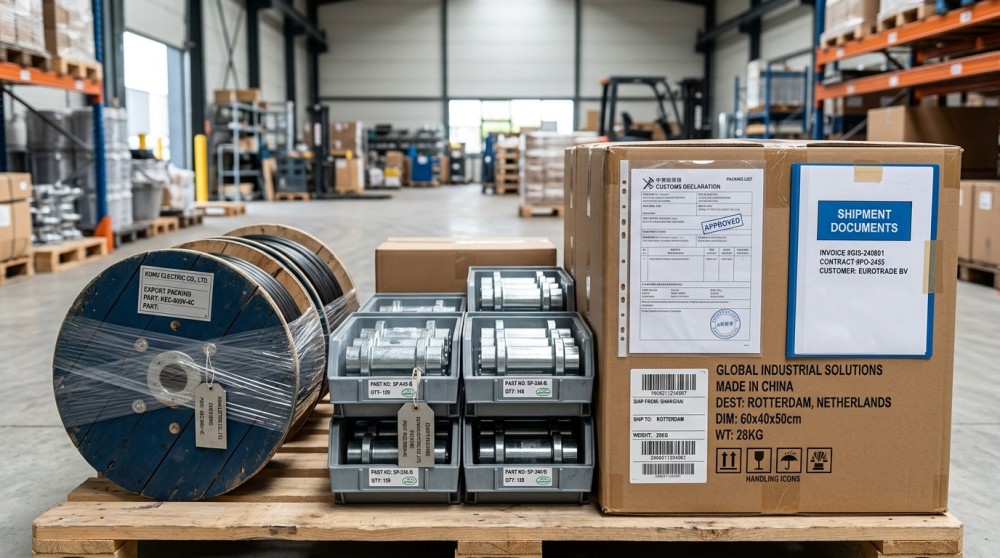
In manufacturing and industrial supply chains, export trade policy is not a distant legal topic. It directly affects whether equipment, components, and electrical supplies can move on time, at the expected cost, and with acceptable documentation risk. For companies managing 3 to 12 month procurement cycles, policy visibility often matters as much as price visibility.
Long-term supply stability depends on four linked conditions: predictable customs clearance, manageable landed cost, compliant documentation, and diversified sourcing options. If one of these fails, the result is usually delayed delivery, rushed substitution, or inflated emergency procurement. This is especially relevant for industrial equipment, spare parts, and project-based orders with installation deadlines.
Export trade policy benefits can include tariff preferences under applicable trade arrangements, smoother customs treatment for correctly classified goods, more transparent licensing requirements, and reduced uncertainty in cross-border shipment planning. These benefits do not remove commercial risk, but they can reduce friction across the full chain from factory scheduling to warehouse replenishment.
For information researchers, the priority is understanding policy impact before market entry. For operators, it is continuity of parts and consumables. For procurement teams, it is quotation accuracy and supplier comparability. For business decision-makers, it is resilience across 2 to 4 sourcing regions rather than dependence on a single route.
What policy-driven stability usually influences
- Lead time planning, including whether standard shipment windows of 7 to 21 days remain realistic for repeat orders.
- Cost control, especially when tariffs, inspection fees, and document correction charges affect final unit economics.
- Bulk order confidence, where buyers need to know if the same policy conditions will still apply in the next quarter or contract cycle.
- Supplier selection, because compliant exporters with stable records often create fewer disruptions than low-price suppliers with weak documentation practice.
Which export trade policy benefits create real value for industrial buyers?
Not every policy measure delivers the same operational value. In practice, industrial buyers should focus on benefits that improve continuity, documentation control, and procurement predictability. In sectors tied to manufacturing machinery, industrial components, and electrical equipment, even a small customs error can delay a replacement part that affects a production line for 24 to 72 hours.
A useful way to assess export trade policy benefits is to ask a simple question: does this policy lower uncertainty at the order, shipment, or compliance stage? If the answer is yes, it has supply stability value. If it only creates a theoretical price advantage but increases document complexity, buyers should review the trade-off more carefully.
The table below translates common policy-related advantages into practical procurement effects. It is designed for teams comparing multiple suppliers, regions, or shipping routes while trying to protect long-term supply stability rather than chasing the lowest visible quote.
The value of these export trade policy benefits becomes clearer when companies compare them against the cost of disruption. A tariff saving may be visible immediately, but the larger gain is often stable replenishment, fewer compliance disputes, and stronger confidence in annual sourcing plans.
How to judge whether a benefit is meaningful
Start with frequency. If a policy benefit applies to monthly or quarterly shipments, it has strategic value. Then review scope. A policy that only helps one low-volume SKU may matter less than one that supports 60% to 80% of your recurring industrial purchases. Finally, test reliability by checking whether suppliers can provide consistent documents across at least 3 consecutive orders.
Buyers should also separate real policy benefits from sales language. A supplier may promise “faster export handling,” but the useful question is whether they can explain classification, origin proof, packing list accuracy, and commercial invoice alignment. Stable supply is built on process control, not just logistics promises.
How to evaluate suppliers for policy compliance and stable wholesale sourcing
When long-term supply stability is the goal, procurement teams should evaluate suppliers beyond product specifications. A technically acceptable part can still become a supply risk if export documentation is inconsistent, if the supplier has weak change control, or if quotation terms do not reflect actual policy-driven costs. This is common in multi-category sourcing, where machinery parts, electrical assemblies, and maintenance items are shipped together.
A practical procurement review usually covers 5 key checkpoints: product classification, origin documentation, packaging and labeling consistency, delivery term clarity, and contingency capability. If any of these are unclear before order confirmation, the buyer may face hidden cost or clearance risk after production is already complete.
Supplier evaluation checklist for export trade policy compliance
Use the following matrix when comparing new and existing suppliers. It supports industrial buyers that need to balance lead time, compliance, and total procurement value rather than focusing only on unit price.
This checklist is especially useful for wholesale sourcing and repeat industrial procurement. A supplier that scores well on all 4 areas is more likely to support stable contracts over 2 to 4 quarters, even when policy conditions change moderately.
A practical 4-step review process
- Confirm the product scope, technical description, and intended use before asking for a final export quotation.
- Request sample documents for a previous shipment format, including invoice, packing list, and product description style.
- Review whether the supplier can support alternative shipment plans if one route faces a 5 to 10 day delay.
- Reassess supplier performance after the first 1 to 3 shipments, not only after annual contract signing.
For decision-makers, this process provides stronger control over quote approval and risk exposure. For operators and plant teams, it improves the chance that the correct parts arrive with usable documentation and no last-minute substitution.
How policy affects cost analysis, quotations, and bulk order planning
Export trade policy benefits are often discussed in legal or regulatory terms, but buyers usually experience them through cost. The real issue is not just factory price. It is the gap between the first quotation and the final landed cost after tariffs, compliance handling, packing adjustments, and border processing are taken into account.
For bulk orders, especially in warehouse supplies, mining equipment support items, and construction industry sourcing, even small cost shifts can affect annual budgets. A 2% to 5% variance may appear manageable on one order, but across quarterly shipments it can distort procurement planning and create pressure to switch suppliers too quickly.
The table below helps buyers compare visible and hidden cost factors linked to export trade policy. It is useful during quotation control, supplier negotiation, and contract review before committing to medium or high-volume orders.
A stable quotation is not always the cheapest quotation. In many industrial categories, the better option is the one that keeps pricing, compliance, and delivery assumptions consistent for 6 to 12 months. That consistency supports better contract timing, inventory planning, and internal budgeting.
When should buyers choose alternatives?
Alternative sourcing should be considered when one route shows repeated policy-related delays, when quote validity periods are too short for approval cycles, or when document quality varies by shipment. The decision should not be based on one incident alone. A pattern across 2 or 3 order cycles is a stronger signal.
For industrial components and electrical supplies, a practical alternative strategy is dual-track sourcing: one primary supplier for volume efficiency, and one secondary source for risk backup. This usually costs more to manage at first, but it reduces emergency buying and line-stop exposure later.
What standards, certifications, and compliance checks should buyers review?
Export trade policy compliance is closely linked to product compliance, but the two are not identical. A product can meet technical expectations and still face shipping issues if labeling, declarations, or restricted content checks are incomplete. Buyers in machinery, industrial equipment, and electrical categories should therefore review both product suitability and export readiness.
Because requirements vary by market and product category, the safest approach is to verify general compliance areas rather than assume one document solves everything. For example, electrical products may involve safety marking expectations, while industrial components may require material disclosure, packaging conformity, or country-specific import declarations.
Core compliance points to review before shipment
- Product description consistency across invoice, packing list, specification sheet, and outer carton marks.
- Applicable safety, material, or market-entry declarations relevant to the destination and product type.
- Battery, cable, motor, and electronic component checks where transport or import handling is more sensitive.
- Packing strength and moisture protection for shipments expected to remain in transit or storage for 2 to 8 weeks.
Common buyer misconception
One common misconception is that compliance is only the exporter’s responsibility. In reality, procurement teams should confirm destination requirements early, especially for complex assemblies or mixed-load shipments. If import expectations and export documents do not match, the buyer still absorbs delay risk, storage charges, or project interruption.
Another misconception is that repeat orders do not need repeated checks. In fact, packaging changes, supplier factory changes, and item code revisions can all alter documentation risk. A brief review every quarter or before major seasonal orders is often enough to catch issues before dispatch.
For companies tracking policy interpretation, market analysis, and supply chain intelligence, these compliance checks should be integrated with sourcing decisions. The strongest procurement teams treat export trade policy benefits as part of operational governance, not as an isolated customs topic.
FAQ: practical questions buyers ask about export trade policy benefits
How can export trade policy benefits improve supply stability for industrial products?
They improve stability by reducing avoidable friction in three areas: customs handling, landed cost planning, and documentation accuracy. For repeat buyers of machinery parts, electrical components, and maintenance supplies, this can mean fewer delayed shipments, more predictable 30 to 90 day procurement plans, and better confidence when placing bulk orders.
What should procurement teams check before confirming a bulk order?
At minimum, check 5 points: product description accuracy, origin support, quote inclusions, lead time assumptions, and alternate shipment options. If the order is project-based, also confirm packing method, split-delivery feasibility, and whether any destination-side import conditions could affect customs release timing.
Are lower prices always a sign of better export sourcing?
No. A lower quoted price may exclude documentation work, stronger export packing, or compliance handling. In industrial B2B purchasing, the better benchmark is total landed and usable cost over at least 2 or 3 order cycles. A slightly higher quote can be more economical if it reduces delay, rework, or replacement risk.
How long should companies plan ahead for stable cross-border supply?
For standard industrial supplies, a 1 to 3 month planning window is common. For project cargo, customized machinery parts, or products with stricter compliance review, 3 to 6 months is often more realistic. Critical spares may also require a safety stock strategy based on actual consumption frequency and shutdown risk.
Why work with us for export trade policy interpretation and sourcing insight
Our portal focuses on manufacturing and processing machinery, industrial equipment and components, and electrical equipment and supplies. That means our coverage is aligned with the real questions buyers and decision-makers face: policy interpretation, market analysis, price trend tracking, technology updates, exhibition intelligence, export trade developments, and supply chain visibility.
Instead of offering generic commentary, we help users connect policy changes with procurement action. You can use our content and support resources to compare sourcing regions, understand quotation risk, track delivery conditions, and identify what matters most before placing repeat or bulk industrial orders. This is especially useful when lead times are tight and replacement flexibility is limited.
If you are evaluating export trade policy benefits for long-term supply stability, contact us for practical support on parameter confirmation, supplier comparison, quotation analysis, delivery cycle planning, compliance checkpoints, sample coordination, and destination-oriented sourcing research. We can also help you narrow down product selection paths for machinery parts, industrial components, and electrical supply categories.
For procurement teams, operators, and business leaders, the next step is simple: define your product scope, target market, expected order frequency, and timing pressure. With that information, you can start a more informed conversation about sourcing options, document readiness, wholesale planning, and risk-balanced supply strategy.



Industry Briefing
Get the top 5 industry headlines delivered to your inbox every morning.