
Battery Procurement Trends: How Supply Chains, Pricing, and Chemistry Are Changing

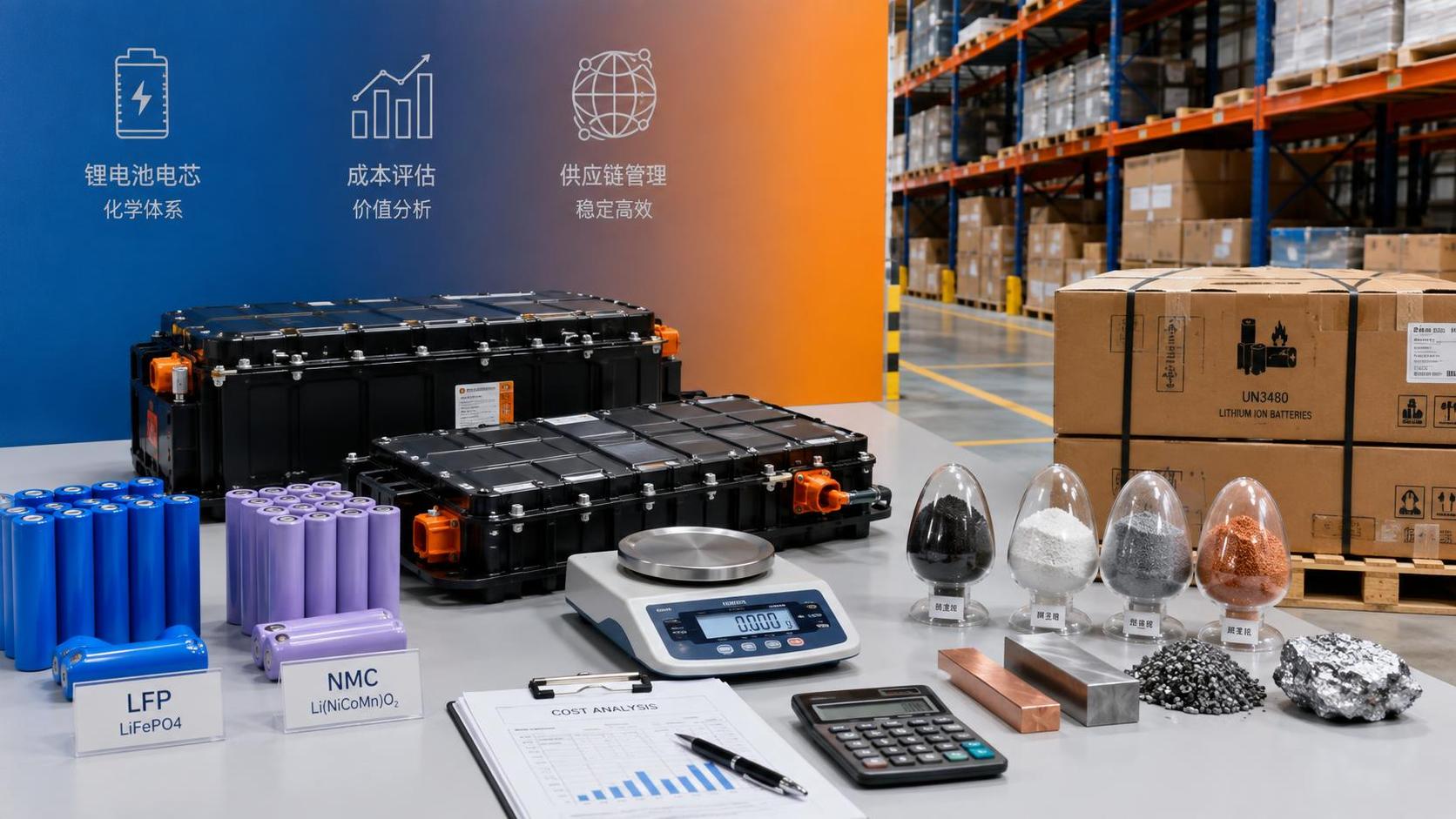
Battery procurement trends are reshaping the daily decisions of purchasing teams across industrial equipment, energy storage, mobility, backup power, automation, and electronics manufacturing. A battery quote that looks attractive on paper can conceal a long lead time, an unproven cell source, limited traceability, or a chemistry that may become difficult to replenish in two years.
For procurement managers, the conversation is no longer limited to “What is the price per pack?” It now includes questions about regional supply, raw-material exposure, battery management system compatibility, transport documentation, warranty responsibilities, end-of-life obligations, and the supplier’s ability to support design changes without interrupting production.
The market is becoming broader rather than simpler. Lithium-ion remains central to many applications, but lithium iron phosphate (LFP), nickel manganese cobalt (NMC), sodium-ion, lead-acid variants, nickel-based batteries, and emerging solid-state technologies all occupy different places in sourcing strategies. The best choice depends less on headline technology and more on the operating conditions, risk tolerance, service model, and total cost of ownership of the buyer.
Procurement is moving from component buying to supply-chain design
In the past, many organizations treated batteries as a standard electrical component: confirm voltage, capacity, dimensions, connector type, and unit cost, then place an order. That model is increasingly inadequate. Batteries are material-intensive, safety-sensitive products with a supply chain that extends from mining and refining to cell manufacturing, module assembly, battery pack integration, software configuration, shipping, and recycling.
This means purchasing teams are being asked to evaluate risks that sit beyond the immediate supplier. A pack assembler may be reliable, for example, but dependent on one cell maker, one battery management system provider, or one overseas route. If any of those links fails, the purchaser may face a production stoppage even when the direct supplier remains responsive.
As a result, more battery procurement programs are separating the buying decision into layers:
- Cell source: Who manufactures the cells, and can the supplier disclose the cell series, origin, and consistency controls?
- Pack engineering: How are cells matched, protected, cooled, wired, and monitored in the final battery assembly?
- Electronics and software: Is the battery management system validated for the required charger, inverter, vehicle controller, or industrial equipment?
- Commercial continuity: What happens if the selected cell format is revised, discontinued, or allocated to larger customers?
- After-sales capability: Can the supplier investigate field failures, provide replacement stock, and support transport-compliant returns?
This approach may require more work at the sourcing stage, but it reduces the chance that a low-cost battery becomes a high-cost disruption later. For manufacturers of powered machinery, UPS systems, automated guided vehicles, industrial tools, or distributed energy equipment, that distinction can be decisive.
Price volatility has not disappeared—it has changed how buyers should read quotations
Raw-material prices have always affected battery costs, yet procurement teams are learning that battery pricing does not move in a straight line with one commodity index. Lithium, nickel, cobalt, graphite, copper, aluminum, electrolyte materials, and separator capacity can influence costs differently depending on the chemistry and supply chain. Currency movements, freight conditions, import duties, local-content rules, and factory utilization also affect the final number.
A lower quoted price can therefore mean several different things. It may reflect genuine efficiency gains, reduced material costs, a supplier seeking to fill capacity, a change in cell grade, or a quotation built on assumptions that are not stated clearly. Buyers should avoid treating price movements as self-explanatory.
Instead of asking only for a fixed unit price, procurement teams can request a transparent commercial structure. This might include the price validity period, minimum order quantity, forecast commitment, payment conditions, applicable duties, packaging format, delivery terms, and the process for handling material-cost changes. For larger or recurring programs, it is often useful to define a review mechanism rather than reopening the entire supply agreement whenever market conditions shift.
The key is not to eliminate every price risk. That is rarely possible. The objective is to know where the risk sits, who carries it, and how quickly both parties can respond when assumptions change.
Why total landed cost deserves more attention
Battery purchasing is especially vulnerable to “cheap unit price” decisions because transport, compliance, inventory, and failure costs can be substantial. A procurement comparison should include more than the ex-works or FOB quotation. Consider dangerous-goods packaging, UN 38.3 documentation, shipping restrictions, import classification, local testing, spare-battery requirements, warehouse conditions, and expected replacement rates.
For a battery used in industrial equipment, downtime may cost far more than the original pack. A supplier located closer to the assembly plant may quote a higher component price but offer shorter replenishment cycles, simpler warranty handling, and lower safety-stock needs. That does not automatically make the regional option better, but it changes the economic comparison.
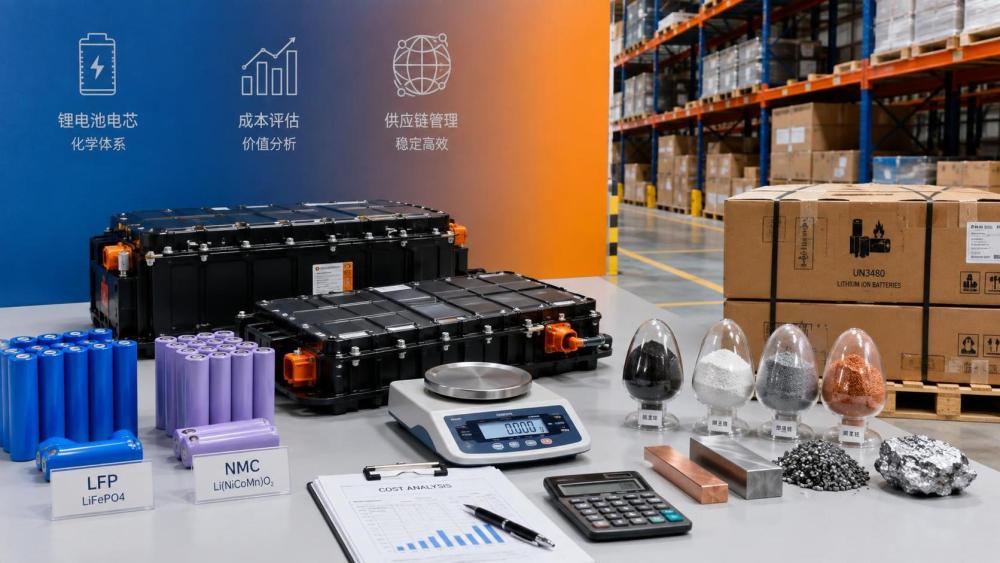
Regional manufacturing is diversifying the supplier map
One of the clearest battery procurement trends is the expansion of regional and localized manufacturing. Governments and industrial groups in multiple markets are investing in cell production, pack assembly, recycling, and critical-material processing. For buyers, this creates new sourcing options—but not necessarily immediate interchangeability.
A regional supplier may offer practical advantages: shorter transit times, easier factory audits, communication in the same time zone, lower exposure to cross-border disruption, and better alignment with domestic content requirements. It may also provide faster engineering collaboration when battery packs need to be adapted for a machine platform or a specific enclosure.
Yet localization should be examined carefully. “Locally made” may refer only to final pack assembly, while cells, electronics, or active materials remain imported. This is not inherently a problem; nearly every battery supply chain is internationally connected. The issue is whether the buyer understands the actual origin and dependency profile.
During supplier qualification, ask where cells are produced, where modules are assembled, where the battery management system is sourced, and where warranty repairs take place. Also ask whether the supplier maintains local inventory or only ships from a central overseas warehouse after an order is released.
Chemistry choices are becoming more application-specific
There is no universally superior battery chemistry. Procurement teams that standardize too aggressively can create avoidable cost or performance problems. The more useful question is: which chemistry best matches the duty cycle, environment, charging behavior, safety expectations, physical constraints, and service life of this application?
LFP has gained attention because of its thermal stability, long-cycle-life potential, and reduced reliance on nickel and cobalt. It is often considered for stationary storage, industrial vehicles, backup systems, and applications where weight and maximum energy density are not the only priorities. NMC and related high-energy chemistries may remain appropriate where compact size, weight reduction, or higher energy density is critical.
Lead-acid batteries still have a role in established backup and industrial applications, particularly where infrastructure, cost expectations, and maintenance practices are already designed around them. Sodium-ion is attracting interest as another developing option, especially where supply diversification and material availability matter, although availability, performance characteristics, and ecosystem maturity must be evaluated case by case.
The procurement implication is clear: do not compare batteries only by nominal voltage and amp-hour rating. A seemingly equivalent product may deliver a different usable energy window, charging profile, low-temperature behavior, cycle life, peak-current capability, or safety response. Chemistry selection needs input from engineering, operations, quality, and service teams—not purchasing alone.
Questions that reveal whether a battery is truly comparable
- What is the usable capacity under the actual discharge rate and operating temperature?
- What charging protocol is required, and is the existing charger compatible?
- What continuous and peak current can the pack support without shortening expected service life?
- What protections are built into the battery management system?
- How does the battery behave after storage, partial charging, or infrequent use?
- Are replacement units expected to remain electrically and mechanically compatible with installed equipment?
- What documentation supports transport, safety, and market-access requirements in the destination country?
Supplier qualification is shifting toward evidence, not claims
In a crowded battery market, many suppliers can provide a specification sheet. Fewer can provide the documentation and process visibility needed for a long-term industrial program. Buyers are increasingly asking for a more complete evidence package before approving a source.
That package may include cell traceability practices, incoming inspection procedures, production test records, battery management system logic, product-change notification rules, quality-control plans, failure-analysis procedures, and relevant shipping or safety documentation. The exact requirements vary by market and application, but the principle is consistent: a supplier should be able to explain how it controls variation, not simply state that quality is important.
Factory audits remain valuable, whether conducted in person or remotely, because they expose practical details that a brochure cannot. Is there segregation of cell lots? Are test stations calibrated? How are nonconforming packs handled? Is battery aging or final inspection performed under controlled conditions? Can serial numbers connect a returned pack to its production batch and key components?
For smaller buyers without extensive internal audit resources, a staged approval process can be more realistic than an all-or-nothing decision. Begin with samples, test them under real operating conditions, review documentation, approve a limited pilot order, and then expand only after performance and support have been verified.
Dual sourcing is useful, but only when designed for compatibility
Many procurement leaders are pursuing dual sourcing to reduce exposure to capacity shortages or geopolitical disruption. The idea is sensible, but a second battery supplier is not a true backup if its product requires a different charger, communication protocol, enclosure, firmware setting, or service procedure.
A more resilient strategy defines which elements must remain common and where alternatives are acceptable. For example, a manufacturer may standardize interfaces, mechanical dimensions, connector specifications, communications protocols, and safety requirements while allowing qualified suppliers to use different internal cell sources. Another organization may retain one approved chemistry but qualify two pack assemblers in different regions.
Dual sourcing also requires demand allocation. If the secondary supplier receives only occasional emergency orders, it may not reserve capacity, maintain tooling, or prioritize engineering support. A planned share of volume, even if modest, can keep the alternative source operationally credible.
Forecast quality is becoming a commercial advantage
Battery suppliers face their own challenges in reserving cells, planning production, and managing hazardous-goods logistics. Buyers that provide unstable forecasts may encounter higher prices, longer lead times, or limited flexibility—not as punishment, but because uncertainty has a cost.
Procurement teams can improve their position by sharing a rolling forecast with clear distinctions between firm orders, likely demand, and long-range planning assumptions. Changes should be communicated early, particularly when a major project, equipment launch, or seasonal demand swing is expected. This gives suppliers a chance to secure materials and capacity before the market tightens.
Good forecasting does not require perfect prediction. It requires disciplined communication. In many supplier relationships, a credible forecast is more valuable than an ambitious annual volume figure that changes every month.
What buyers should monitor through the next sourcing cycle
The most important battery procurement trends will continue to converge: chemistry diversification, regional manufacturing, regulatory scrutiny, supply-chain transparency, and stronger expectations around recycling and product stewardship. Procurement professionals should watch for supplier consolidation, cell-format changes, evolving transport rules, new local-content incentives, and shifts in the availability of qualified technical support.
It is also wise to monitor the point where a battery becomes a system-level decision. When batteries communicate with chargers, inverters, industrial controllers, or fleet-management platforms, sourcing changes can affect software behavior as much as electrical performance. A substitute should never be approved solely because its voltage and dimensions appear similar.
The strongest procurement strategy is not built around predicting every market movement. It is built around preparation: validated alternatives, clear specifications, transparent cost models, realistic forecasts, and supplier relationships grounded in technical evidence. In a battery market that changes quickly, those foundations give purchasing teams room to respond without sacrificing production reliability or long-term product performance.



Industry Briefing
Get the top 5 industry headlines delivered to your inbox every morning.