
Clean air equipment news as dust rules tighten in 2026


As dust control rules tighten in 2026, manufacturers and buyers are watching environmental equipment news for clean air solutions, environmental equipment news for industrial emissions, and latest environmental equipment news more closely than ever. This update highlights how stricter compliance targets are reshaping filtration, monitoring, and pollution control investment, helping operators, sourcing teams, and decision-makers track practical technologies, market signals, and regulatory shifts that support cleaner, more efficient production.
Why clean air equipment news matters more as 2026 dust rules approach
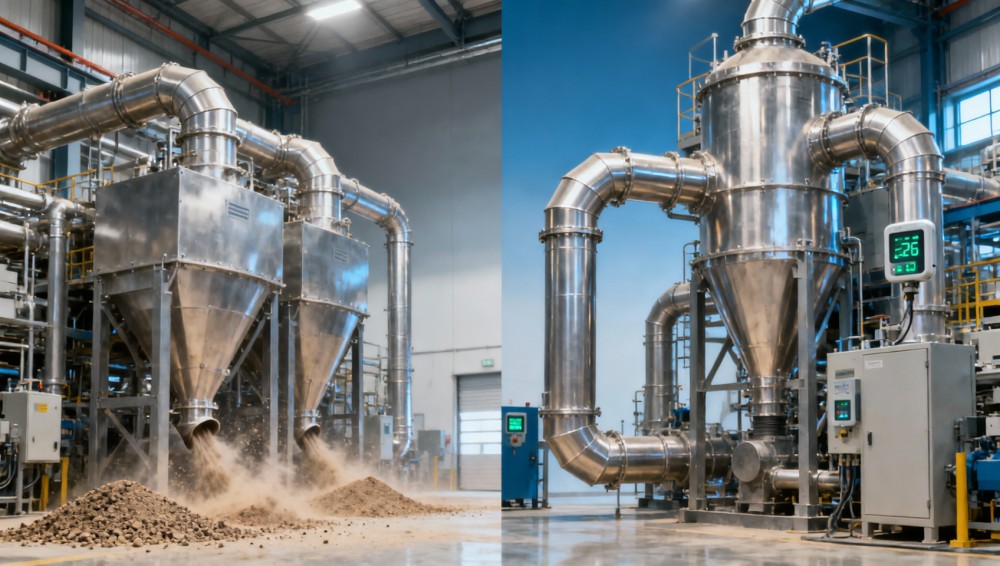
For industrial plants, dust compliance is no longer a narrow environmental issue. It affects production continuity, worker exposure control, export readiness, and supplier evaluation. In manufacturing, processing machinery, electrical equipment, and component production, a change in emission limits can trigger equipment upgrades within 3–12 months, especially where dry material handling, cutting, grinding, conveying, or packaging generate fine particulate matter.
This is why clean air equipment news has become a practical sourcing signal rather than a general information topic. Information researchers want policy interpretation. Operators need equipment that can run through 8–24 hour shifts without unstable pressure drop. Procurement teams compare lead times, maintenance intervals, and spare part availability. Decision-makers focus on compliance risk, capital allocation, and whether retrofits can support output expansion without creating new bottlenecks.
Across the broader industrial market, environmental equipment news for industrial emissions now sits close to supply chain intelligence. A dust collector is rarely a standalone purchase. It often links to fans, motors, ducts, sensors, control panels, compressed air systems, and sometimes heat recovery or explosion isolation devices. That makes policy updates relevant to both equipment buyers and plant planners who must coordinate multiple vendors in 2–4 implementation stages.
The latest environmental equipment news also matters because compliance costs vary sharply by plant condition. A facility with existing extraction points and a stable duct layout may complete a retrofit faster than a plant with scattered dust sources or changing product mixes. In practical terms, many projects are delayed not by the collector itself, but by design review, shutdown planning, and confirmation of applicable standards for dust type, airflow range, and monitoring frequency.
- Policy tracking helps plants avoid rushed buying in the final 1–2 quarters before enforcement milestones.
- Technology tracking helps users compare cartridge, baghouse, wet scrubber, and hybrid systems for different dust loads.
- Market tracking helps sourcing teams judge price movements in filters, fans, valves, sensors, and electrical controls.
- Supply chain tracking helps decision-makers plan spare parts, service support, and installation windows.
Which industrial scenarios face the highest pressure under tighter dust control rules?
High-dust processing lines and enclosed production areas
Plants with grinding, sanding, cutting, crushing, mixing, or powder transfer operations are often the first to feel the impact of new dust rules. These lines can generate fluctuating particle loads within a single shift, especially where raw material moisture changes or product specifications vary by batch. For operators, the practical question is not only whether a collector can capture dust, but whether it can maintain stable airflow under varying concentrations and production peaks.
Enclosed workshops add another layer of concern. Once dust escapes local capture points, housekeeping frequency rises, visibility can decline, and worker comfort becomes harder to maintain. In these cases, environmental equipment news for clean air solutions is useful because it highlights not just central collection systems, but also source extraction arms, enclosure upgrades, floor-level pickup design, and real-time particulate monitoring for indoor control.
Facilities processing metal, wood, minerals, chemicals, plastics, grain-like materials, or battery-related powders often need different control strategies. Particle size distribution, stickiness, moisture, and combustible properties can change equipment selection. This is where broader industrial portal coverage adds value: policy interpretation, technology updates, and supply chain intelligence must be read together rather than in isolation.
Retrofit-heavy plants versus new line investments
New facilities usually have more flexibility. Duct routing, fan placement, electrical loads, and monitoring points can be designed early. Retrofit projects are harder. Buyers often work within a 7–15 day shutdown window, limited roof load, existing cable trays, and fixed machine positions. Under these constraints, latest environmental equipment news becomes a decision tool for evaluating compact systems, modular units, and staged installation approaches.
Retrofits also require better cross-team communication. Procurement may see a collector quote as competitive, while operators worry about filter replacement access, and plant engineers question pressure losses in old ducts. Decision-makers should therefore review scenario-specific factors before comparing price alone.
The table below summarizes where tighter 2026 dust rules are likely to create the strongest purchasing urgency and what users should verify first.
The key takeaway is simple: the most urgent projects are usually not the largest plants, but the ones where dust generation is variable, operator exposure is visible, or retrofit conditions make delay expensive. That is why environmental equipment news for industrial emissions should be linked to application detail, not read as a generic market headline.
How to compare dust control technologies without missing hidden trade-offs
Choosing between baghouse, cartridge, wet, and hybrid solutions
Buyers often start with filtration efficiency claims, but this is only one part of the decision. A useful comparison should include dust characteristics, maintenance burden, footprint, energy implications, and fit with the plant’s operating pattern. For example, a system that performs well at steady load may not respond as well when particle loading swings several times per shift or when sticky dust shortens cleaning intervals.
Baghouse systems are often considered where higher dust volumes and robust continuous duty are expected. Cartridge collectors may appeal where compact footprint and lower to medium dust loads matter. Wet systems can be evaluated in selected cases where dust characteristics support that route, though water handling and downstream treatment must be reviewed. Hybrid designs may help when plants need a balance of pre-separation, filtration, and emission monitoring within one retrofit path.
Operators should also look at service reality. How often must filters be replaced: every few months, annually, or based on pressure trend? Can access be managed safely in a narrow maintenance aisle? Is spare stock available locally within 1–3 weeks? These are not minor points. They directly influence uptime and total ownership cost.
The comparison table below helps procurement teams and technical users screen common clean air solutions before requesting detailed quotations.
No single technology is universally better. The stronger approach is to compare 4 core dimensions together: dust type, airflow requirement, maintenance window, and compliance documentation needs. That is where latest environmental equipment news becomes commercially useful, because it helps teams connect product updates with real plant constraints rather than spec sheets alone.
A practical 5-point screening checklist
- Confirm whether dust is dry, sticky, abrasive, moisture-sensitive, or potentially combustible before selecting filter media.
- Estimate operating pattern across at least 2 conditions: average production and peak production.
- Review maintenance access, including filter change clearance, hopper discharge access, and fan service space.
- Check control integration with existing PLC, alarm points, and pressure or particulate monitoring.
- Ask suppliers to separate equipment price from installation, commissioning, spare parts, and compliance support.
What should procurement teams check before placing orders?
Selection, lead time, and service risks
In clean air equipment sourcing, the lowest quote can become the most expensive option if system boundaries are unclear. Many industrial buyers discover late that fan sizing, duct support, control cabinet changes, or on-site commissioning are excluded. A sound procurement review should cover at least 6 items: airflow basis, dust properties, utility requirements, installation scope, consumable schedule, and acceptance criteria.
Lead time is another pressure point as 2026 approaches. Standard units may ship in 2–6 weeks, but customized housings, non-standard voltages, larger fans, or project-level controls can push delivery much further. If spare filters, valves, or instrumentation come from different origins, buyers should also ask about split shipments and whether startup can proceed if one component is delayed.
For cross-border sourcing, export packing, customs documents, electrical conformity expectations, and after-sales response windows matter. This is why a portal that combines company news, exhibition coverage, export trade developments, and supply chain intelligence can reduce sourcing blind spots. Procurement teams need more than product lists. They need a clearer view of who can deliver, who can support, and who can adapt to local compliance demands.
Cost structure and alternatives
Initial equipment cost is only one layer. Buyers should compare ownership costs over 12–36 months, especially for plants running daily or around the clock. Filters, compressed air consumption, fan power, downtime during replacement, and waste handling all affect the business case. In some cases, improving source capture and duct layout can reduce the collector size required, which may lower both capex and operating cost.
An alternative to immediate full replacement is phased upgrading. Plants may keep existing housings, replace filter elements, add differential pressure monitoring, and improve controls first. This approach can be useful where budgets are tight or shutdown windows are short. However, it only works if the existing shell, fan, and airflow design still support the required performance range.
Industry Briefing
Get the top 5 industry headlines delivered to your inbox every morning.