
Rail transit equipment market trends are reshaping investment priorities as operators, manufacturers, and procurement teams balance capacity expansion, digital upgrades, lifecycle costs, and supply-chain resilience.
For business evaluators, the central question is no longer whether rail investment will grow, but where demand is bankable and which equipment categories can sustain margins.
Current opportunities are concentrated in asset renewal, urban capacity upgrades, electrification, signaling modernization, and maintenance systems that reduce service disruption across existing networks.
However, announced rail programs do not automatically become equipment orders. Funding certainty, local-content rules, approval cycles, interface requirements, and operator procurement models determine commercial accessibility.
A credible market assessment therefore needs more than passenger forecasts or headline project values. It must connect regional demand, product fit, supplier qualification, lifecycle economics, and execution risk.
What Business Evaluators Should Conclude From Current Rail Transit Equipment Market Trends
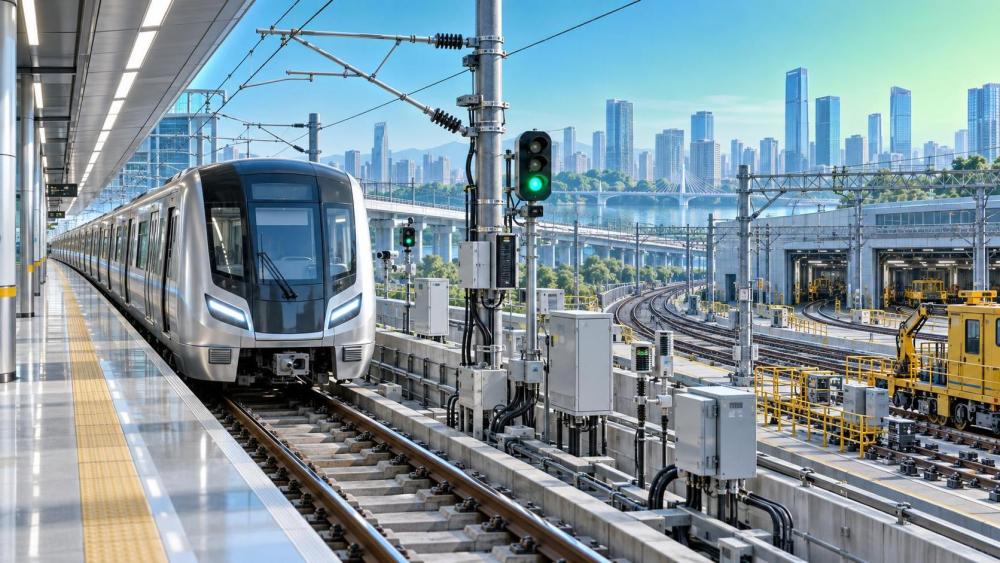
The market is shifting from large, isolated rolling-stock purchases toward integrated programs combining vehicles, signaling, traction power, depot automation, condition monitoring, and long-term service commitments.
This transition favors suppliers able to demonstrate interoperability, local delivery capability, documented reliability, and lifecycle support rather than simply offering the lowest initial equipment price.
Demand remains uneven across regions. Mature networks prioritize replacement and digital capacity gains, while rapidly urbanizing markets still require new metro, light-rail, commuter, and intercity systems.
For evaluators, the strongest opportunities often sit in projects with confirmed financing, an identified operator, a published delivery timetable, and technical specifications that match existing supplier capabilities.
Projects at early feasibility stage should be treated differently. They can reveal future demand, but they should not be valued as near-term sales pipelines without evidence of approvals.
The commercial value of rail transit equipment also depends on contract structure. Turnkey contracts may offer larger revenue, while subsystem and aftermarket contracts can provide better risk-adjusted returns.
In practical terms, the market rewards companies that can enter early enough to influence specifications while retaining disciplined controls over warranties, interfaces, localization, and payment exposure.
Demand Is Moving Toward Renewal, Capacity, and Network Reliability
New rail construction still drives major procurement in selected markets, but aging fleets and constrained urban networks are creating a larger recurring opportunity in modernization and renewal.
Operators are replacing obsolete trains, traction equipment, signaling assets, and depot systems because failures increasingly affect safety, punctuality, passenger satisfaction, and operating costs.
Urban rail authorities are also pursuing capacity without building entirely new corridors. Communications-based train control, platform upgrades, improved headways, and automated operations can raise throughput significantly.
That changes equipment demand. Procurement teams increasingly seek compatible upgrades that can be introduced during limited maintenance windows without interrupting daily passenger operations.
Rolling stock demand remains important, especially for metro expansion and fleet replacement. Yet buyers now evaluate train availability, energy consumption, maintainability, and spare-parts commitments alongside acquisition cost.
For suppliers, this means a vehicle bid is rarely only a vehicle bid. It may require depot tools, training, diagnostic software, localization plans, warranty reserves, and long-term maintenance capacity.
Business evaluators should separate greenfield orders from replacement cycles. Greenfield projects can be larger, but renewal programs often have clearer asset data and more predictable operational requirements.
Light rail, metro, regional rail, and high-speed rail should also be assessed independently. Their approval processes, supply bases, technical standards, financing structures, and procurement priorities differ materially.
Freight rail investments may overlap with transit equipment in electrification, signaling, power systems, and maintenance technologies, but purchasing criteria are usually driven by different utilization economics.
The best demand signal is not a broad infrastructure announcement. It is a sequence of budget allocation, design completion, prequalification, tender release, preferred-bidder selection, and contract award.
Technology Priorities Are Centered on Availability, Energy, and Digital Control
Technology investment in rail is increasingly measured against operational outcomes. Operators want higher availability, lower energy use, faster fault resolution, better capacity utilization, and stronger cybersecurity controls.
Digital signaling is among the most consequential priorities because it can increase line capacity while improving operational visibility and reducing dependence on legacy relay-based infrastructure.
Communications-based train control, European Train Control System deployments, automatic train operation, and traffic management platforms are therefore central elements of current rail transit equipment market trends.
Yet signaling projects carry high integration risk. The technology must work across vehicles, trackside systems, communications networks, control centers, platform equipment, and operator procedures.
Evaluators should favor suppliers with demonstrated migration experience, especially where new digital systems must coexist with legacy assets during lengthy commissioning and transition periods.
Electrification remains another major priority. Rail operators are upgrading substations, overhead contact systems, switchgear, transformers, protection equipment, energy storage, and power-quality management systems.
Energy efficiency is increasingly embedded in train specifications. Regenerative braking, lightweight materials, efficient HVAC systems, silicon-carbide traction converters, and intelligent energy-management software are receiving greater attention.
The value case depends on local electricity prices, traffic density, climate conditions, and maintenance practices. Technology claims should therefore be verified using route-specific operating assumptions.
Predictive maintenance is also moving from pilot projects into procurement requirements. Sensors, onboard diagnostics, remote monitoring, and analytics platforms support earlier intervention and more efficient spare-parts planning.
Still, digital maintenance platforms create limited value when asset records are incomplete, data ownership is unclear, or maintenance teams lack authority to act on generated alerts.
Cybersecurity is becoming a mandatory investment category rather than an optional add-on. Connected trains and control systems expand exposure across operational technology, communications, vendor access, and cloud services.
How to Evaluate Equipment Categories by Commercial Attractiveness
Rolling stock typically offers high contract values, but it also involves intensive engineering, certification, localization, warranty liability, and working-capital requirements that can weaken project returns.
Subsystem suppliers may face lower revenue per contract, yet traction systems, braking equipment, doors, HVAC, bogies, auxiliary power, and onboard electronics can generate repeatable demand.
Signaling and train-control systems often offer strategic value because they influence network performance and can create long-term service, software, upgrade, and spare-parts opportunities.
However, this category requires rigorous technical qualification. Safety certification, interface accountability, software validation, and regulatory acceptance can lengthen sales cycles and increase execution costs.
Electrification equipment is attractive where national rail expansion is supported by grid investment and decarbonization policy. Suppliers should examine local grid standards, utility coordination, and construction capacity.
Depot equipment and maintenance systems can be less visible than trains, but they are essential for fleet availability. Opportunities include lifting systems, wheel lathes, inspection equipment, washing systems, and workshop automation.
Aftermarket demand deserves particular attention because installed fleets require consumables, overhauls, retrofits, obsolescence management, software updates, and technical support throughout long operating lives.
A supplier with a modest initial equipment position can build meaningful recurring revenue by securing approved-part status, local service capability, repair capacity, and reliable response performance.
Business evaluators should score each category using market size, tender frequency, qualification barriers, gross-margin potential, service attachment, capital intensity, and exposure to project delays.
That framework is more useful than comparing headline market values alone. Large categories may be highly competitive, while narrower subsystem niches can offer stronger defensibility and profitability.
Regional Demand Must Be Read Through Procurement and Policy Conditions
Asia continues to account for substantial rail equipment demand because of urbanization, metro construction, intercity rail expansion, and government-backed manufacturing strategies across several large markets.
Yet market access varies widely. Domestic champions, local-content thresholds, technology-transfer expectations, and public procurement rules can limit direct participation by external suppliers.
Europe offers extensive modernization potential through fleet replacement, digital signaling, cross-border interoperability, electrification upgrades, and decarbonization requirements for regional and urban transport.
European projects can provide attractive technical opportunities, but they commonly involve demanding certification, fragmented national requirements, labor constraints, and strict expectations for delivery performance.
North American demand is supported by commuter rail renewal, transit expansion, fleet modernization, and federal infrastructure programs. Buy America provisions remain a critical commercial consideration.
Local assembly, domestic sourcing, compliant documentation, and supplier-development plans may be necessary before a technically competitive offer can become commercially viable in that market.
Middle Eastern markets can generate significant metro and passenger-rail opportunities where cities are expanding rapidly. Project pipelines, however, depend heavily on public funding priorities and delivery schedules.
Latin America, Africa, and Southeast Asia contain selective growth opportunities, particularly in urban transit and rail rehabilitation, but financing, foreign-exchange exposure, and institutional capacity require careful review.
Country analysis should therefore go beyond population growth and transport need. Evaluators should identify the actual funding source, procurement authority, delivery model, and local execution partner.
Supply-Chain Resilience Has Become a Core Tender and Investment Issue
Rail equipment is dependent on long, specialized supply chains involving castings, forgings, power semiconductors, cables, electronics, braking components, bearings, software, and certified materials.
Disruption in a single qualified component can delay vehicle delivery, commissioning, acceptance testing, and revenue recognition. Alternate sourcing is often difficult because safety approval takes time.
Semiconductor availability, electrical component lead times, and raw-material price volatility remain relevant risks, particularly for traction, signaling, power conversion, and control-system suppliers.
Evaluators should inspect supplier concentration at the component level, not only at the final-assembly level. A diversified prime contractor may still rely on single-source critical parts.
Inventory strategy also matters. Holding more safety stock can protect delivery schedules, but it increases working capital and creates obsolescence risk for rapidly evolving electronic components.
Localization can improve resilience and tender eligibility, but it should be treated as an operational program. Local suppliers need qualification, quality systems, engineering support, and realistic ramp-up timelines.
Contract terms should allocate supply-chain risk transparently. Fixed-price obligations without escalation clauses, schedule relief, or customer-approved substitutions can erode margins quickly during disruption.
Currency risk deserves equal attention in cross-border projects. Revenue, imported inputs, labor costs, and financing may be denominated in different currencies over multi-year delivery periods.
Key Risks That Can Change the Value of a Rail Equipment Opportunity
Project delay is often the largest commercial risk in rail transit. Delays can arise from land acquisition, permitting, political changes, funding gaps, civil-works slippage, or unresolved technical interfaces.
Equipment suppliers are frequently dependent on civil contractors and system integrators. A delayed depot, tunnel, platform, or power connection can postpone testing even after equipment is complete.
Warranty exposure can become material when system responsibilities are unclear. Suppliers should define performance boundaries, operating assumptions, test procedures, and acceptance responsibilities before contract signature.
Technical specifications may also be overprescriptive or inconsistent. Requirements copied from previous projects can create conflicts between standards, environmental conditions, maintainability expectations, and available technology.
Competitive pressure is another concern. Low initial bids may be used to secure market entry, especially where suppliers seek reference projects, local manufacturing scale, or future service access.
Business evaluators should distinguish strategic bids from sustainable bids. A competitor’s aggressive pricing does not necessarily indicate the achievable margin for a disciplined supplier.
Political and regulatory risk can alter project economics through revised localization rules, import restrictions, public-budget reprioritization, tariff changes, or modified safety and cybersecurity requirements.
Finally, aftermarket assumptions should be tested carefully. Service revenue is valuable only when the contract grants access to maintenance work, spare-parts supply, software updates, or asset data.
A Practical Decision Framework for Procurement and Market Entry
Start by defining the opportunity type: greenfield construction, system extension, fleet replacement, signaling renewal, electrification upgrade, depot modernization, or long-term maintenance outsourcing.
Next, validate project maturity through public budgets, financing agreements, environmental approvals, procurement notices, operator plans, and engineering progress rather than market forecasts alone.
Assess product-market fit by comparing technical standards, environmental conditions, localization requirements, certification pathways, installed-base compatibility, and service expectations with internal capabilities.
Then model economics over the full contract life. Include bid costs, engineering changes, tooling, local content, warranty reserves, spare parts, working capital, and likely schedule extensions.
Map critical dependencies before committing resources. These include civil-work progress, customer decisions, approval authorities, technology interfaces, key component suppliers, and qualified local partners.
For procurement teams, total cost of ownership should be evaluated using availability, energy use, maintenance labor, spare-parts consumption, expected overhaul timing, and system upgrade flexibility.
A low purchase price can become expensive when it creates frequent failures, difficult diagnostics, incompatible interfaces, excessive energy use, or dependence on a distant service organization.
Decision-makers should also request evidence from comparable installations. Reference performance, commissioning history, defect rates, service responsiveness, and contract variation records reveal execution quality more clearly than brochures.
Conclusion: Focus on Executable Demand and Lifecycle Value
Rail transit equipment market trends point to sustained demand, but the highest-value opportunities are increasingly linked to modernization, digital control, energy efficiency, and reliable lifecycle support.
For business evaluators, the right conclusion is selective optimism. Rail investment can create durable revenue, yet project quality, market access, technical fit, and contract discipline determine results.
Suppliers and investors should prioritize funded programs with clear procurement pathways, defensible technology positions, manageable localization requirements, and credible opportunities for aftermarket participation.
Those who evaluate rail equipment through lifecycle economics and delivery risk, rather than headline project size, will be better positioned to identify commercially viable growth opportunities.