
Industrial Components Market Outlook: Supply Risks and Growth Drivers for 2026

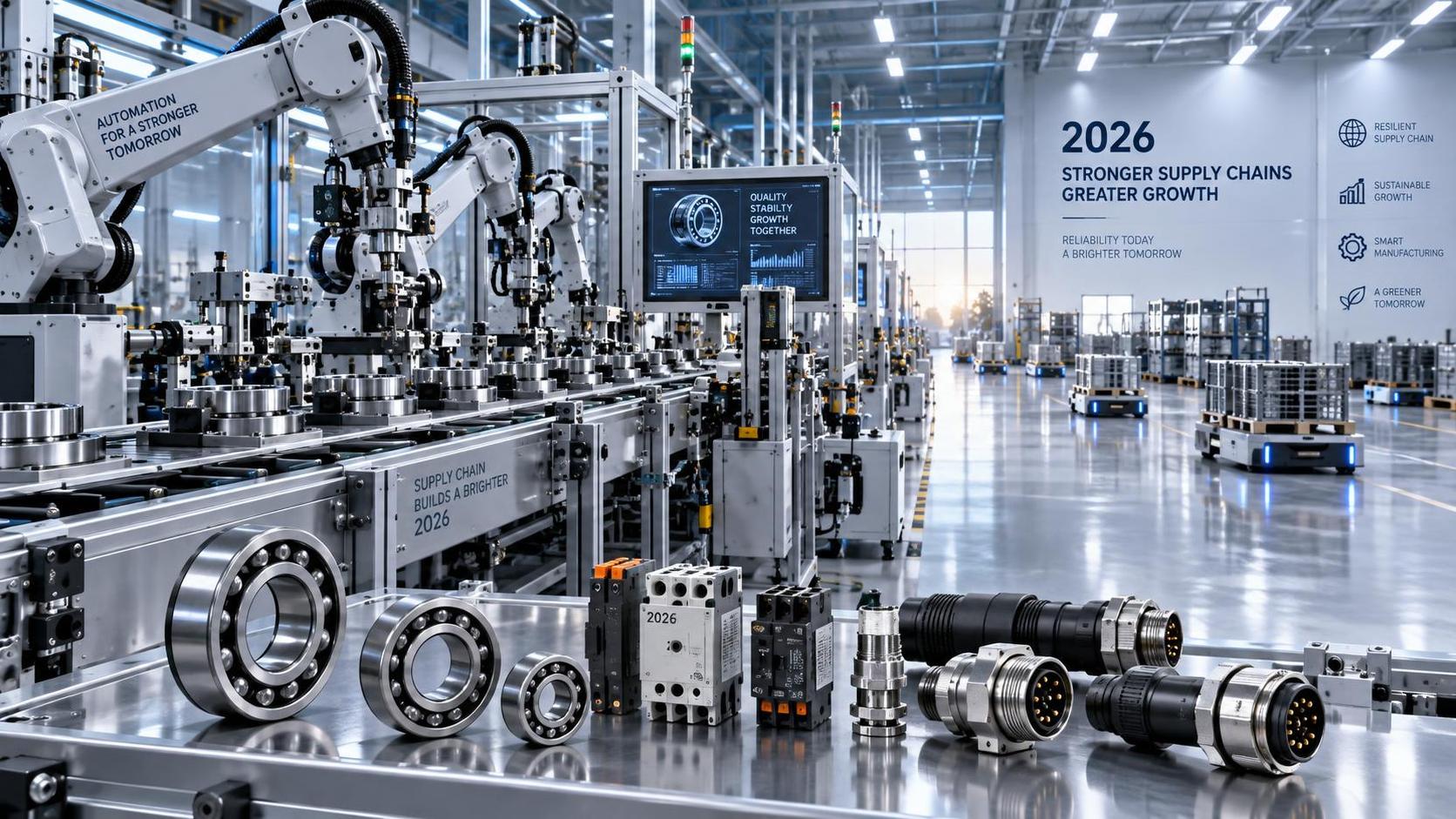
A production plan can look secure until a single component becomes constrained: a bearing series is allocated, a control relay has an extended lead time, a connector must be requalified, or a casting supplier changes its delivery window after tooling capacity is already committed. The immediate impact is rarely limited to one purchase order. It can delay equipment assembly, force engineering substitutions, consume working capital through buffer stock, and expose contractual delivery risk.
The industrial components market outlook for 2026 points to a mixed environment rather than a uniform shortage or broad-based recovery. Demand is likely to remain supported by automation, electrification, maintenance investment, energy infrastructure, and selective manufacturing expansion. At the same time, supply conditions will remain uneven across materials, component families, regions, and qualification requirements. The practical response is to separate structural growth opportunities from supply exposure, then build sourcing and inventory policies around the components that can actually stop production.
Why component risk is becoming more selective
Industrial supply chains are less likely to be disrupted by one universal constraint than by overlapping, category-specific pressures. A manufacturer may find standard fasteners readily available while facing uncertainty in specialty seals, motion-control assemblies, power electronics, precision machined parts, or electrical connectors designed for a particular environment. This difference matters because procurement teams cannot manage every item with the same lead-time assumption, safety-stock formula, or supplier strategy.
Several forces are creating this uneven risk profile. Production capacity has shifted across regions, but localization does not automatically create qualified second sources. Some components depend on specific grades of steel, copper, aluminum, engineering polymers, rare materials, electronic substrates, or high-tolerance machining capability. Others are constrained less by raw materials than by tooling, test capacity, engineering approval cycles, or the limited number of suppliers able to meet a required protection rating, temperature range, traceability requirement, or performance specification.
For decision-makers, the key question is not simply whether a category is “available.” It is whether the exact approved part, its material inputs, and its manufacturing route can support the required production schedule. A substitute that is technically similar may still introduce certification, fitment, warranty, or system-integration risk.
Demand drivers that can tighten specific component categories
Automation remains a major source of demand for industrial components, but its effect is concentrated. Growth in factory modernization can increase requirements for sensors, servo systems, gearboxes, linear motion products, industrial connectors, enclosures, safety devices, programmable control hardware, and related power-distribution components. Replacement demand is also important: facilities seeking higher uptime often invest in spare parts, condition monitoring, and retrofits before committing to a full production-line upgrade.
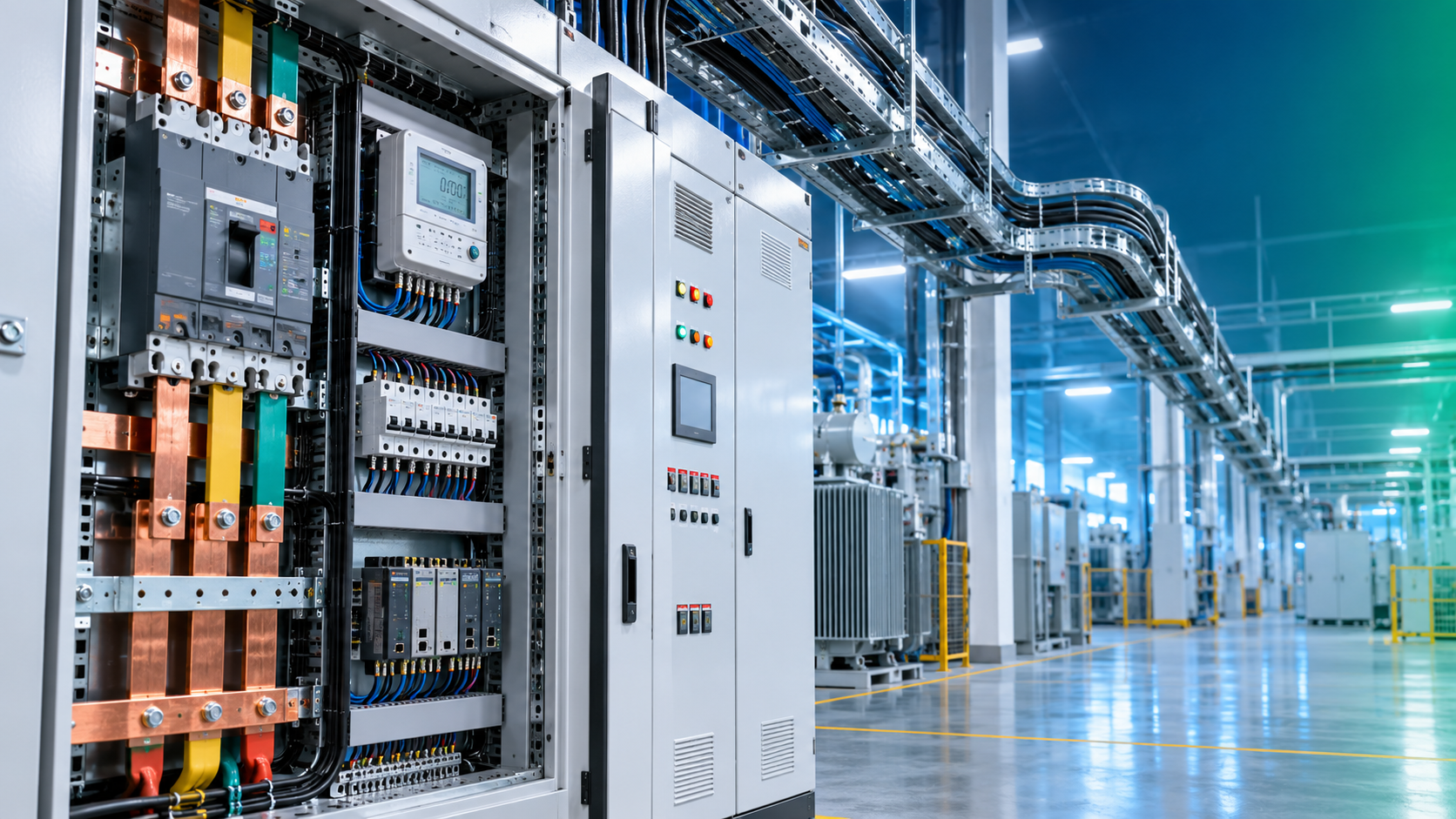
Electrification is another driver with a wide supply-chain footprint. It affects demand for cable assemblies, terminals, contactors, circuit protection, power supplies, thermal management parts, busbar materials, motors, drives, and insulation systems. Even where end-market demand is volatile, electrification projects can put pressure on specialized components with longer design-in cycles and limited approved sources.
Energy and infrastructure investment may support demand for switchgear components, industrial pumps, valves, bearings, fabricated assemblies, control panels, transmission-related equipment, and corrosion-resistant materials. These projects often require longer delivery commitments and tighter documentation. When they coincide with expansion in manufacturing, mining, process industries, or data-intensive facilities, supplier capacity can become less flexible.
Maintenance spending creates a different kind of demand. It is less visible than new equipment investment but can quickly reduce available stock of common replacement parts. A plant facing repeated downtime may buy more motors, couplings, seals, filters, relays, and sensor inventory than planned. This behavior can amplify short-term pressure in distributor channels, especially where original equipment specifications limit replacement options.
Where supply risk deserves closer attention
Not every item needs executive attention. The greatest exposure usually sits where operational criticality, supply concentration, long replacement lead time, and technical specificity intersect. A low-cost component can carry a high business risk when it prevents a high-value machine from being assembled or repaired.
Electrical and electronic components require particular discipline because a part number change can affect software, control logic, thermal behavior, electromagnetic compatibility, enclosure design, or safety performance. Buying a visually comparable item through an unofficial channel may solve a temporary shortage while creating a larger reliability or traceability problem. For critical controls, source assurance matters as much as price and quoted delivery.
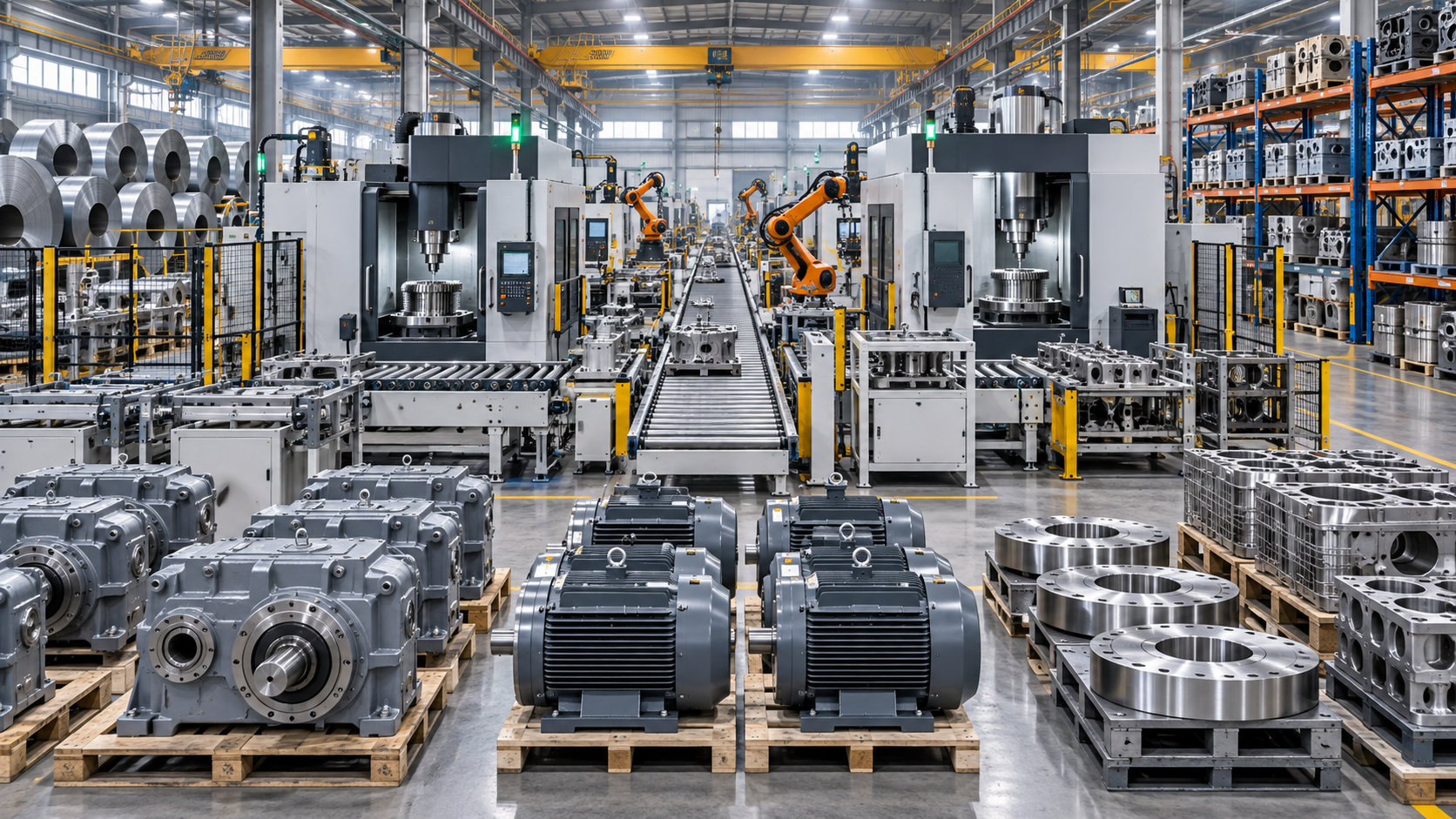
Mechanical components can appear easier to replace, but interchangeability should not be assumed. Bearings, seals, couplings, valves, and gear components must be evaluated against load, speed, lubrication, temperature, contamination, mounting dimensions, and duty cycle. A substitute that fits physically may shorten service life or shift failure risk elsewhere in the machine.
Regional production shifts: opportunity with qualification work
Regionalization is changing sourcing decisions, but it should not be treated as a simple choice between domestic and overseas supply. Buyers are increasingly balancing landed cost against transit-time variability, trade exposure, communication speed, engineering support, and recovery capacity during disruptions. A nearby supplier can shorten logistics cycles yet still depend on imported materials, electronics, castings, or subassemblies. Conversely, an established international supplier may offer stronger process consistency and deeper inventory support than a new local source.
The more useful approach is to map the supply chain beyond the direct vendor. Ask where the critical material originates, where machining and assembly occur, whether proprietary tooling is involved, where final testing is completed, and how replacement parts are stocked. This map often reveals that two approved suppliers share the same upstream dependency, making apparent dual sourcing less resilient than expected.
Regional diversification works best when it is introduced before demand becomes urgent. Qualifying a second source involves more than comparing samples. Engineering teams may need to review drawings, tolerances, material grades, coatings, process controls, test methods, packaging, documentation, and service performance. Procurement may need to negotiate minimum order quantities, tooling responsibilities, capacity reservation, payment terms, and change-notification requirements. Treating this work as a one-time emergency project usually produces weak alternatives.
Build forecasts around failure consequences, not broad market averages
Market outlooks are useful for setting assumptions, but plant-level decisions depend on the bill of materials. A broad forecast for industrial output does not reveal whether a particular actuator, terminal block, hydraulic cartridge, or molded housing will be available when needed. Companies should translate market conditions into a component-level view of exposure.
A practical review begins by separating parts into distinct groups. High-volume, standardized items may be managed through framework agreements, distributor inventory, and replenishment signals. Long-lead engineered items need earlier forecast sharing and capacity discussions. Critical service spares require a different logic: the appropriate stock level depends on the cost of downtime, likelihood of failure, repair lead time, and whether a compatible alternative exists.
Forecast quality also improves when sales, operations, engineering, and procurement work from the same assumptions. Sales forecasts alone may omit service demand, project-stage changes, customer-specific customization, and expected design revisions. Production plans may understate commissioning needs or trial-build requirements. Engineering may know that a component is being phased out before purchasing sees the effect. A monthly exception review for critical items can expose these gaps earlier than an annual sourcing plan.
Questions that reveal hidden exposure
- Which components have no approved substitute that can be used without system retesting?
- Which supplier lead times include only production time and exclude capacity allocation, testing, or transport?
- Where does a single raw material, tooling location, or subcontractor serve multiple direct suppliers?
- Which service parts are inexpensive but capable of stopping a production asset?
- Which upcoming design changes could create excess inventory or make existing stock unusable?
- What assumptions in the demand plan have not been shared with suppliers?
These questions are more valuable than a generic instruction to “increase inventory.” Extra stock can protect continuity, but it also ties up cash, increases obsolescence risk, and can conceal weak supplier communication. The objective is targeted resilience: more protection where interruption costs are severe, less where standardized replacement is genuinely practical.
Technology investment changes the buying decision
The 2026 outlook is also shaped by how technology changes the value of components. Buyers are not only sourcing parts; they are choosing levels of performance, connectivity, energy efficiency, maintainability, and diagnostics. A motor, sensor, drive, power supply, or valve with better monitoring capability may reduce unplanned maintenance exposure, but it can also create dependence on a more specialized supply base.
Before adopting a higher-specification component, teams should examine the full lifecycle position. Can maintenance personnel diagnose it? Are spare modules available through normal channels? Is firmware or configuration support required? Does the component rely on proprietary accessories or software? Can the equipment operate safely in a reduced mode if the advanced feature is unavailable? These questions help avoid a situation where a technology upgrade improves performance on paper but complicates field support.
Standardization is often an effective countermeasure, provided it does not override technical requirements. Reducing unnecessary variation in connector families, motor frames, bearing sizes, sensor interfaces, and control-panel components can improve buying leverage, simplify stocking, and make internal substitutions easier. Standardization should follow a review of operating conditions, however. Forcing one common part into incompatible environments can create greater maintenance cost than it saves in purchasing.
Commercial terms should reflect supply reality
When supply conditions are uncertain, a purchase order alone may not provide meaningful protection. Delivery commitments should distinguish between planned lead time, confirmed production slot, material availability, and shipment readiness. This is especially important for build-to-order components, large fabricated assemblies, and parts requiring customer-specific testing.
Supply agreements can be strengthened by defining forecast horizons, order-freeze periods, capacity reservation rules, acceptable substitute procedures, engineering-change notifications, quality documentation, and escalation contacts. The purpose is not to transfer every risk to the supplier. It is to make risk visible while there is still time to respond. A supplier that receives unstable forecasts and late design changes cannot reliably protect capacity, regardless of the contract language.
Cost discussions also need a wider lens. A lower unit price can be outweighed by higher logistics variability, quality escapes, inventory carrying cost, or lost production time. When comparing sources, use total operational exposure alongside quoted price. This is particularly important for parts that require incoming inspection, custom packaging, field installation support, or special storage conditions.
What a resilient 2026 plan looks like
A resilient plan does not assume that every supply risk can be eliminated. It identifies where disruption would have the greatest operational and financial effect, then assigns practical controls. For some categories, the answer will be a second qualified supplier. For others, it will be a controlled inventory position, a redesign toward standard components, an early capacity commitment, or a documented repair strategy.
Business leaders should review component exposure alongside capital plans, product roadmaps, maintenance priorities, and customer commitments. Growth drivers such as automation and electrification can create attractive demand, but they also increase the importance of power, control, motion, and connectivity components that may have longer qualification paths. The strongest position comes from treating procurement, engineering, and operations as parts of the same risk decision—not as separate functions reacting after a shortage reaches the production floor.

Industry Briefing
Get the top 5 industry headlines delivered to your inbox every morning.
- industrial supply
- industrial components
- supply chain
- procurement
- manufacturing
- pumps
- valves
- bearings
- fasteners
- seals
- switchgear
- sensors
- production capacity
- industrial connectors
- power electronics
- energy efficiency
- industrial supply chains
- mechanical components
- condition monitoring
- circuit protection
- electrical connectors
- industrial components market
- factory modernization
- industrial components market outlook