
Equipment Demand Outlook: Which Industrial Segments Are Growing Fastest?


Where equipment demand is shifting most visibly
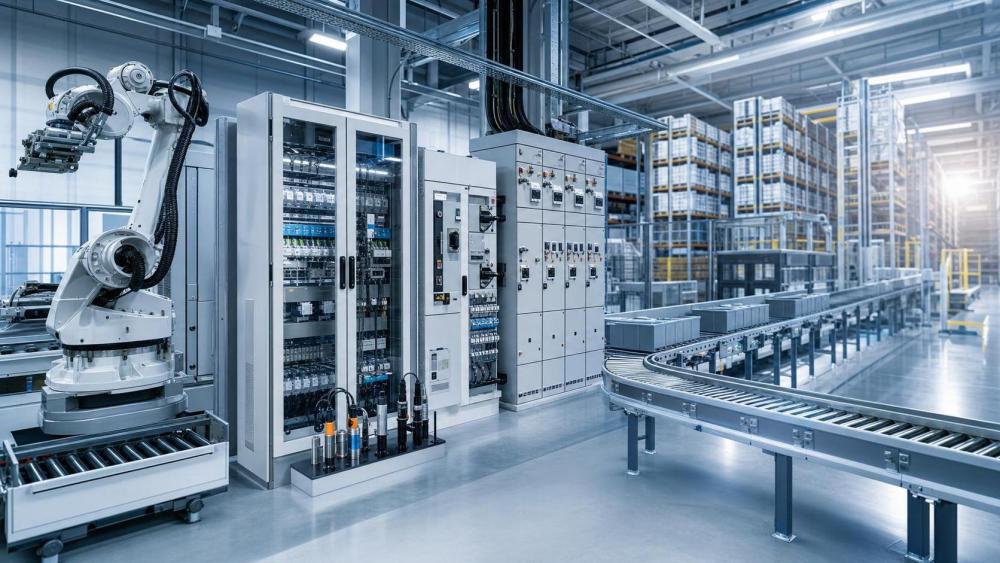
Industrial capital is not slowing in a uniform way. It is moving toward segments where resilience, automation, energy efficiency, and regional supply security matter more than simple capacity expansion.
That makes equipment demand a sharper indicator than broad output data. It shows where factories are upgrading, where utilities are expanding, and where logistics networks are being rebuilt.
Across manufacturing and infrastructure, the fastest gains are appearing in automation systems, electrical equipment, power-related components, process control machinery, and warehouse-linked material handling assets.
The pattern is important because it reflects structural decisions, not temporary restocking. In many markets, buyers are prioritizing equipment that improves uptime, labor efficiency, compliance, and energy performance.
For companies tracking industrial markets through platforms such as NEXUSINSIGHTS, this is where demand signals become useful. Equipment demand now reveals not only what is being purchased, but why investment priorities are changing.
The fastest-growing industrial segments are not all growing for the same reason
One of the clearest shifts is the strength of automation-related equipment demand. Motion systems, sensors, drives, PLCs, machine vision, and integrated control platforms are benefiting from labor pressure and production flexibility needs.
Electrical equipment is also advancing quickly. Switchgear, transformers, power supplies, cable systems, and industrial distribution products are seeing stronger demand from plant upgrades and grid-adjacent investment.
Process industries are adding another layer. Pumps, valves, compressors, filtration units, and thermal systems are gaining where water treatment, food processing, chemicals, and energy transition projects continue to move forward.
Material handling equipment is growing for different reasons. Warehousing expansion, shorter delivery expectations, and regional stock buffering are supporting conveyors, automated storage systems, forklifts, and sorting equipment.
More specialized machinery is rising in selected niches. Semiconductor support equipment, battery production lines, precision machining systems, and cable processing machinery show especially strong equipment demand in targeted investment clusters.
A quick view of where momentum is strongest
Why equipment demand is accelerating now
This cycle is being shaped by several forces at once. That is why equipment demand looks stronger in some categories even when overall industrial sentiment remains mixed.
- Factories are replacing aging assets to reduce downtime, not just to increase output.
- Energy costs are pushing investment toward higher-efficiency motors, drives, power systems, and thermal control equipment.
- Regional manufacturing expansion is creating fresh equipment demand in Southeast Asia, India, Mexico, and selected Eastern European markets.
- Compliance standards are tightening around emissions, traceability, safety, and electrical performance.
- Supply chain volatility is encouraging more local production capacity and more warehouse automation.
Another important point is timing. Many projects delayed during earlier uncertainty are now returning in a more selective form, with stronger attention to return on asset productivity.
That changes the profile of equipment demand. Buyers are less interested in generic expansion and more focused on systems that solve bottlenecks, reduce operating risk, or shorten payback periods.
The impact reaches beyond the machine itself
Rising equipment demand is affecting the industrial chain in layered ways. The change is not limited to OEM order books or factory installation schedules.
Mechanical component suppliers are seeing stronger pull for bearings, couplings, seals, housings, and precision motion parts because system upgrades usually trigger component-level redesign.
Electrical ecosystems are also broadening. A single power upgrade often increases demand for connectors, control cabinets, protection devices, cables, and backup power integration.
Service models are changing as well. Commissioning, predictive maintenance, software support, and spare-parts planning are becoming part of the equipment demand equation rather than post-purchase extras.
This is why industry information platforms have become more valuable. Tracking exhibitions, policy updates, factory expansions, technology releases, and export activity gives a clearer picture of real equipment demand than headline market claims.
What tends to happen when demand strengthens
- Lead times tighten first in electrical and control categories.
- Specification requirements become more detailed, especially for efficiency and compatibility.
- Retrofit projects rise before greenfield construction fully expands.
- Regional sourcing alternatives gain attention when imported equipment faces cost or delivery pressure.
What to watch when judging which segments will keep growing
Not every area with strong recent orders will sustain the same pace. The better approach is to follow signals that reveal durable equipment demand instead of short-term replenishment.
One signal is repeat investment in adjacent systems. If a facility upgrades motors, controls, and power distribution together, that usually suggests a longer modernization cycle.
Another is project diversity. When equipment demand comes from multiple sectors such as food, utilities, electronics, and warehouse infrastructure, momentum is less dependent on one policy window.
Export patterns also matter. Rising outbound shipments of industrial machinery or electrical assemblies can indicate that domestic manufacturers are benefiting from wider international equipment demand.
More worth watching are replacement cycles hidden inside mature markets. In North America, Europe, Japan, and Korea, a large share of equipment demand now comes from digital retrofits and energy upgrades rather than new plant volume.
Useful indicators for ongoing assessment
A practical way to respond to changing equipment demand
The most effective response is not to chase every hot segment. It is to build a clearer framework for separating durable equipment demand from temporary noise.
Start by mapping where demand is tied to structural themes such as electrification, automation, compliance upgrades, and regional manufacturing relocation. These tend to support longer investment cycles.
Then compare market signals across several layers. Company expansion news, exhibition activity, component shortages, export data, and policy incentives often tell a more complete story together.
In practical terms, it helps to review equipment demand by application, not only by product family. A motor controller for packaging automation and one for water treatment may face very different demand conditions.
This is where a platform like NEXUSINSIGHTS can support better judgment. Ongoing visibility into industrial markets, technology shifts, supply chain changes, and company activity makes trend validation more grounded.
The next step is straightforward: keep tracking which segments show repeat project flow, evaluate whether application requirements are becoming more advanced, and build a stage-based view of equipment demand before making broader commitments.
Industry Briefing
Get the top 5 industry headlines delivered to your inbox every morning.
- industrial machinery
- supply chain
- manufacturing
- predictive maintenance
- pumps
- valves
- compressors
- bearings
- seals
- transformers
- switchgear
- control cabinets
- sensors
- equipment demand
- production capacity
- processing machinery
- material handling equipment
- energy efficiency
- electrical equipment
- industrial electrification
- industrial distribution