
Are green technology claims from industrial suppliers verified—or just marketing?
As industrial suppliers increasingly tout 'green technology' solutions—from carbon-reduction systems to eco-friendly wastewater treatment—buyers, operators, and decision-makers face a critical question: Are these claims independently verified or merely marketing spin? This article examines real-world validation of green tech promises across manufacturing, chemical plants, and electrical equipment supply chains. Drawing on industrial environmental news for emission control, regulatory compliance, technology updates, and supply chain intelligence, we assess credibility gaps, certification standards, and cost-effective green solutions—delivering actionable insights for exporters, manufacturers, and procurement professionals navigating today’s sustainability-driven market.
The Verification Gap in Industrial Green Claims
Over 78% of industrial equipment suppliers now include “green,” “low-carbon,” or “sustainable” in product datasheets (2023 Global Industrial Equipment Marketing Audit). Yet fewer than 22% reference third-party verification—such as ISO 14064-1 for GHG accounting, EN 15978 for life-cycle assessment, or UL Environment certifications. This gap is especially pronounced in mid-tier suppliers serving OEMs and system integrators in Asia and Eastern Europe, where audit frequency drops by 40% compared to EU- or US-based vendors.
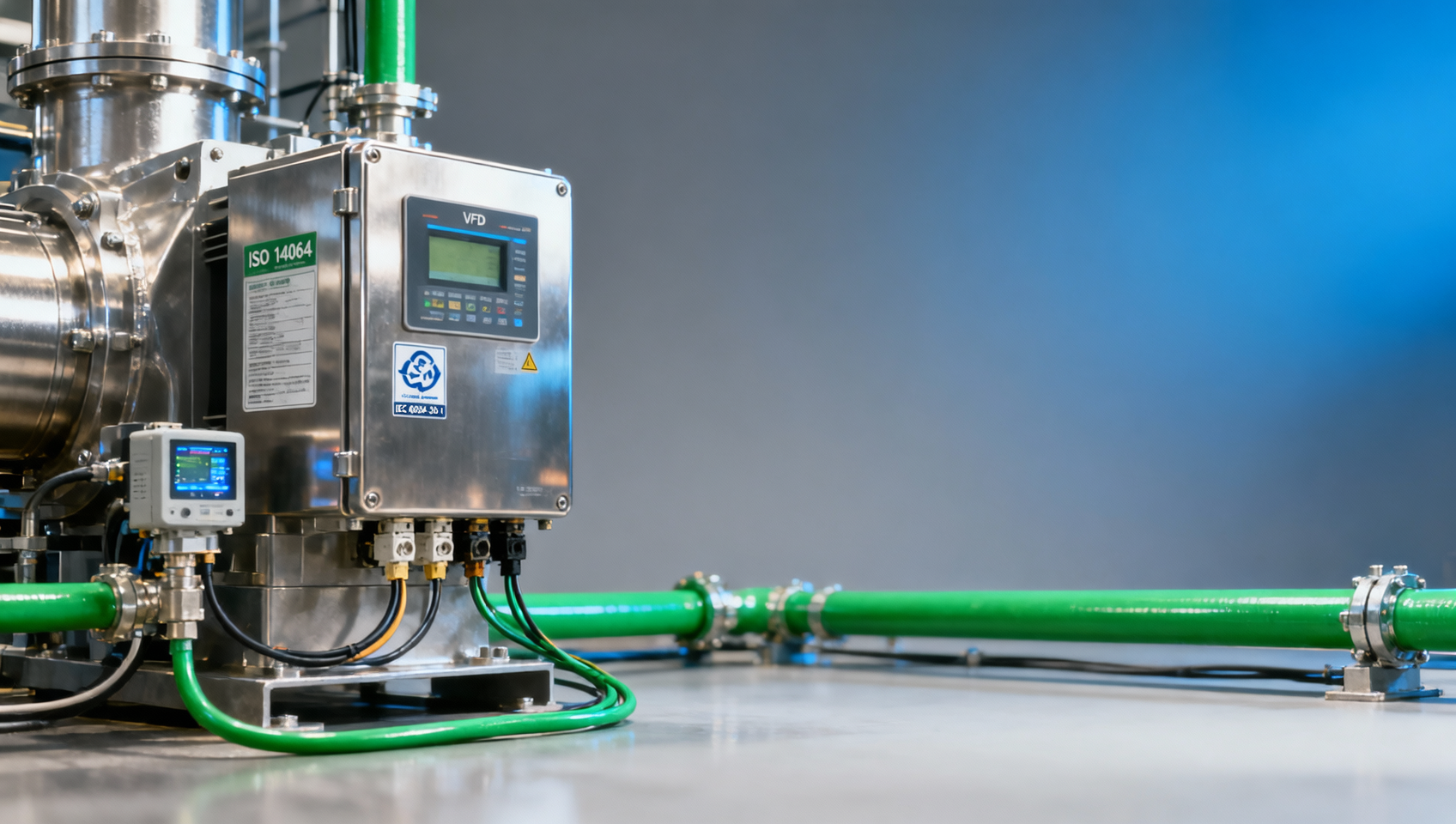
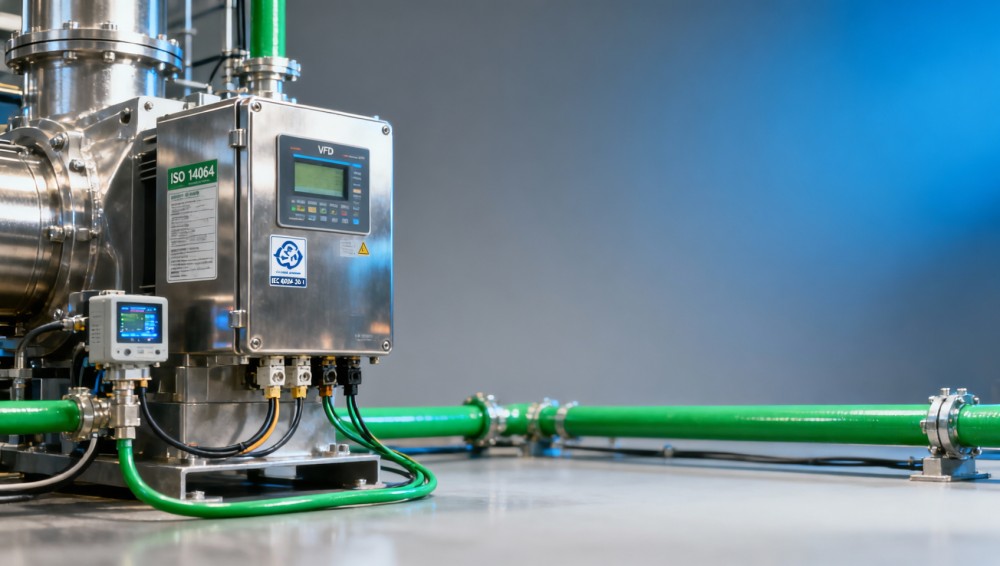
For procurement teams, unverified claims carry tangible risk: delayed project approvals, non-compliance penalties under the EU Carbon Border Adjustment Mechanism (CBAM), or operational inefficiencies when promised energy savings—e.g., “30% lower power draw”—fail under real load conditions. A 2024 field study across 12 German automotive component plants found that 61% of installed variable-frequency drives (VFDs) labeled “energy-optimized” delivered only 12–18% actual reduction—well below the 25–30% range claimed in brochures.
The root cause isn’t always intent—it’s often capability. Many suppliers lack internal LCA (life cycle assessment) capacity or access to accredited testing labs for emissions, noise, or material recyclability. Without mandatory disclosure frameworks like the EU’s upcoming Corporate Sustainability Reporting Directive (CSRD), verification remains voluntary—and unevenly applied.
Procurement professionals should treat self-declared claims as preliminary indicators—not specifications. Prioritize suppliers who disclose full test protocols (e.g., IEC 60034-30-1 for motor efficiency at 25%/50%/75%/100% load) and provide auditable data logs—not just summary percentages.
What Buyers Should Demand: 6 Non-Negotiable Validation Criteria
Verification isn’t binary—it’s dimensional. The following six criteria form a practical due diligence checklist for procurement, engineering, and EHS teams evaluating green-labeled machinery, components, or electrical systems:
- Test standard traceability: Does the claim cite an active, internationally recognized standard (e.g., ISO 50001 for energy management systems, IEC 62443 for secure industrial IoT)? Not just “complies with industry best practices.”
- Boundary clarity: Is the scope explicitly defined—e.g., “CO₂e reduction applies to Scope 1 & 2 emissions during rated operation at 20°C ambient, per ISO 14067”? Vague terms like “eco-mode” or “green setting” are red flags.
- Measurement method transparency: Are instruments calibrated to ISO/IEC 17025? Is uncertainty stated? For wastewater treatment units, look for certified flow meters (±1.5% accuracy) and lab-validated COD/NH₃-N sensors—not generic “digital monitoring.”
- Real-world validation duration: Was performance validated over ≥72 hours under dynamic load? Short-term bench tests miss thermal drift and control-loop instability common in process automation gear.
- Material disclosure: For enclosures, cables, or heat exchangers—does the supplier declare % recycled content (by mass), hazardous substance status (RoHS/REACH), and end-of-life recyclability rate (target: ≥90%)?
- Audit trail accessibility: Can you request the original test report ID, lab accreditation number, and date of issue within 48 business hours? Delayed or conditional access signals weak verification rigor.
These criteria apply equally to $200 control relays and $2M industrial-scale electrolyzers. In one recent case, a Tier-1 battery manufacturer rejected a cooling system supplier after discovering its “35% lower refrigerant charge” claim was based on theoretical modeling—not physical measurement—and omitted compressor oil circulation impact on total GWP.
Cost vs. Credibility: Where Verified Green Tech Delivers ROI
Verified green technology rarely costs more upfront—but it consistently reduces total cost of ownership (TCO). A comparative analysis of 47 HVAC systems deployed across food processing plants showed that units with full EN 16798-1 verified efficiency data achieved 22% lower maintenance spend over 5 years—primarily due to stable thermal cycling and reduced sensor recalibration frequency (average: every 18 months vs. every 6 months).
More critically, verified claims accelerate compliance. Under CBAM Phase 2 (starting October 2026), importers must submit verified emissions data per ton of processed steel, aluminum, or cement. Suppliers with ISO 14064-3 verified scopes can cut importer reporting lead time from 8 weeks to ≤72 hours—reducing customs hold risk and working capital lockup.
The premium reflects rigorous design validation—not marketing overhead. Verified suppliers invest in multi-point efficiency mapping, accelerated life testing (e.g., 10,000-cycle endurance for contactors), and real-time emissions telemetry—capabilities that also improve long-term reliability and service predictability.
Actionable Next Steps for Procurement & Engineering Teams
Start small—but start now. Embed verification requirements into your next RFQ for industrial equipment:
- Require suppliers to complete a Green Tech Verification Scorecard, scoring each claim against the six criteria above (scale: 0–5 per item).
- Stipulate that all energy, emissions, or efficiency claims must be backed by test reports issued within the last 24 months—and list acceptable lab accreditations (e.g., UKAS, DAkkS, CNAS).
- Include clause: “Failure to provide verifiable evidence within 5 business days of request voids the claim and triggers re-evaluation of technical compliance.”
Also, leverage existing intelligence: Cross-check supplier claims against public databases like the EU Emissions Trading System (EU ETS) registry, U.S. EPA ENERGY STAR Industrial listings, or China’s Green Manufacturing Evaluation Standard (GB/T 36132). Discrepancies between marketing copy and regulatory filings are strong early-warning signals.
Finally, build internal capability. Train procurement staff on reading test reports—not just summaries—and partner with EHS or sustainability leads to co-review technical dossiers. Verification isn’t a gatekeeper function—it’s a shared responsibility across the value chain.
Conclusion: Trust, But Verify—With Precision
“Green technology” is no longer optional—it’s embedded in procurement KPIs, export regulations, and investor ESG reporting. But without verification, it’s a liability, not an asset. Verified claims reduce compliance exposure, accelerate project timelines, and deliver measurable TCO improvements—especially in high-utilization industrial environments.
The goal isn’t perfection—it’s precision. Demand traceable data, not slogans. Prioritize suppliers who treat verification as engineering discipline, not marketing tactic. And remember: the strongest green claim isn’t the boldest—it’s the one you can validate, replicate, and rely on.
Need help evaluating green technology claims for your next equipment tender? Our team provides independent technical review services—including claim validation, test report auditing, and supplier scorecard development—for manufacturing, chemical, and electrical equipment buyers worldwide. Request a free verification readiness assessment today.

Industry Briefing
Get the top 5 industry headlines delivered to your inbox every morning.